REVIEW · RIO DE JANEIRO
Helicopter tour in Rio de Janeiro – 25 Minutes
Book on Viator →Operated by 4FLY RJ · Bookable on Viator
Rio from above makes sense fast. This 25-minute helicopter tour gives you a tight circuit over Rio’s biggest hits, from Christ the Redeemer to Sugarloaf and the long sweep of Ipanema and Copacabana. It’s one of those rare experiences where you’re not waiting for hours to get the main event.
I like two things right away: you get a very efficient overview of Rio’s layout, and the operation keeps it simple with bottled water plus smartphone safety gear so you can actually capture the views without hassle. The vibe also feels organized and calm, and the flight is described as smooth, with a friendly crew who can help you feel at ease.
One consideration: this is weather-dependent. If visibility is poor, your flight can be canceled and rescheduled, so plan this as your “best-views-available” choice rather than a guaranteed must-see on a single fixed day.
In This Review
- Key highlights in plain English
- Why this 25-minute Rio helicopter flight feels so worth it
- Price and value: what you’re really paying for
- Meeting at Barra da Tijuca: the part you don’t want to freestyle
- Flying safety gear and comfort: what actually helps on a short flight
- Christ the Redeeder over Corcovado: seeing Rio’s icon with scale
- Sugarloaf Mountain: the aerial angle that makes it feel different
- Ipanema, Leblon, Arpoador, Copacabana: the coastline sweep you came for
- Arpoador shows up twice for a reason
- São Conrado and Barra da Tijuca: the Rio of depth, not just postcard
- Pedra da Gávea and Lagoa Rodrigo de Freitas: the non-beach moments that surprise you
- Pedra da Gávea: rock dominance from above
- Lagoa Rodrigo de Freitas: water contrast
- Copacabana’s history and the city’s green: Forte, Jockey Club, Botanical Garden
- Forte de Copacabana: meaning you can see
- Jockey Club and the Botanical Garden: the city isn’t only coast
- Door-off style planning note: how the route is framed
- Photos, timing, and what to wear for rotor-noise reality
- Who this tour suits best (and who should skip it)
- Should you book this Rio helicopter tour with 4FLY RJ?
- FAQ
- What is the duration of the Rio helicopter tour?
- Where does the tour start and end?
- What is the price per person?
- What time window does the activity run?
- What’s included in the tour?
- What’s not included?
- Are there any weight limits?
- Does the flight require good weather?
- FAQ
- Is this tour available for everyone visiting Rio?
- How many people are in a group?
- What is the meeting point neighborhood?
Key highlights in plain English

- Short 25-minute circuit that still hits the big icons without eating your whole day
- Up-close aerial angles over Christ the Redeemer and Sugarloaf that are hard to match from the ground
- Coastline sweep across Ipanema, Leblon, Arpoador, Copacabana, and São Conrado
- More than beaches with flyovers of Lagoa Rodrigo de Freitas, Pedra da Gávea, and landmarks like the Forte de Copacabana
- Small groups (max 6) for a more personal briefing and less crowd stress
- Phone-safe setup so you can film and take photos more confidently from your seat
Why this 25-minute Rio helicopter flight feels so worth it
In Rio, time gets weird. Traffic can chew up your day, and the big viewpoints are scattered. A short helicopter tour is a practical answer: you trade lines and transit for instant “get your bearings fast” views.
This one is built around speed and clarity. In about 25 minutes, you’re not just seeing one highlight—you’re seeing how the city pieces connect: ocean first, then mountains and neighborhoods behind it. That mental map helps if you’re also planning beaches, viewpoints, or the Christ/Corcovado area later.
The other value factor is that it stays manageable. At this duration, you’re less likely to feel rushed by fatigue, and it’s easier to pair with other activities the same day. If you’re the kind of traveler who likes a headline experience without committing a half-day, this fits.
You can also read our reviews of more tours and experiences in Rio de Janeiro.


Price and value: what you’re really paying for
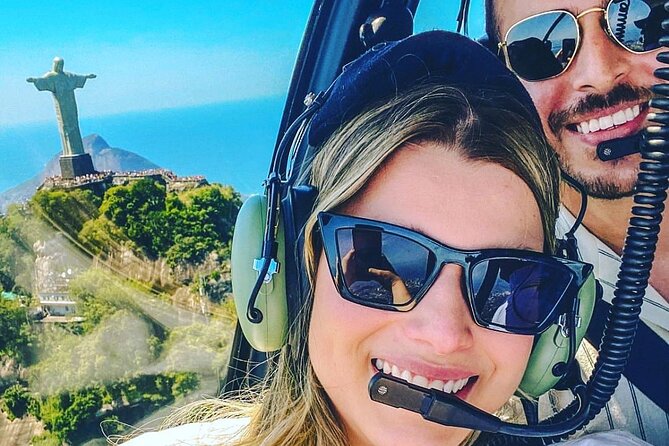
At $230.33 per person, it’s not a budget move. But you’re paying for something specific: aerial access to Rio’s main geometry. From the ground, Rio can be dramatic, but angles are limited—you can’t easily see the whole coast and mountain line in one view.
This flight is also priced like a premium experience because it’s intimate: maximum 6 travelers and a modern-feeling aircraft is mentioned in feedback. When a tour keeps the group small, you usually get smoother coordination and a better sense of safety.
Consider the value math like this: if you’d otherwise spend most of a day fighting transit or trying to cover multiple viewpoints, a short flight can replace that “search for the best angle” time. It won’t replace beach time or museum time, but it can top off your trip with a perspective you can’t recreate with photos alone.
Meeting at Barra da Tijuca: the part you don’t want to freestyle
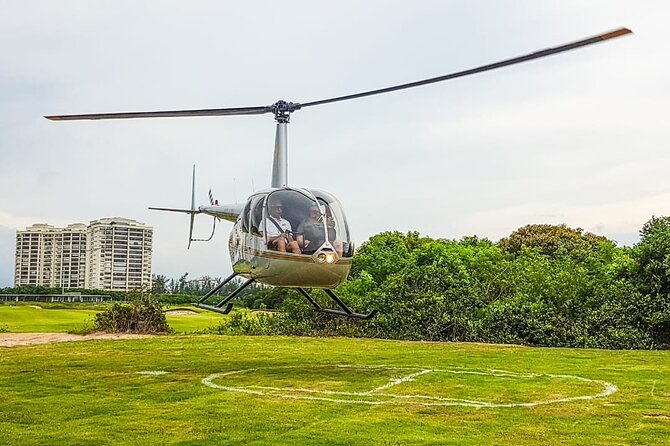
The meeting point is Av. Ayrton Senna, 2541, Barra da Tijuca (RJ 22775-002), and the tour ends back at the same spot. For first-timers, that matters. You can plan your day around one area instead of trying to coordinate a far-flung pickup.
It’s also helpful that the start location is listed as near public transportation. If you’re not staying near the beach strip you’ll likely use a taxi or rideshare at some point anyway, but at least you’re not locked into an awkward car-only route to get there.
A few planning notes based on the tour details:
- You’ll want to arrive with time to check in before boarding.
- The operating window is 9:00 AM to 5:30 PM (during the listed season dates).
- The team says you’ll receive confirmation within 48 hours, subject to availability.
Also, keep in mind this experience is only for foreigners outside Brazil. If you’re a resident or you’re currently in Brazil, you won’t be eligible for this specific activity.
Flying safety gear and comfort: what actually helps on a short flight
The tour includes bottled water and smartphone safety equipment. That’s not a small detail. Holding a phone while you’re seated near rotor noise is one thing; getting a proper setup to keep it secure is another.
If you care about photos, this is where the experience pays off. A phone-safe holder/case setup helps you get less shake and more stable framing, especially when you’re aiming at fast-moving coastline views.
Safety-wise, you’ll be in a situation where you’re exposed to more sound and motion than a street view, even if the flight is smooth. Feedback you have here points to a calm crew and a friendly pilot, and that’s exactly what you want for a short first helicopter ride.
Two practical constraints you should take seriously:
- Passenger weight limit is 265 lbs per person.
- Service animals are allowed, so long as you follow the operator’s instructions.
Christ the Redeeder over Corcovado: seeing Rio’s icon with scale
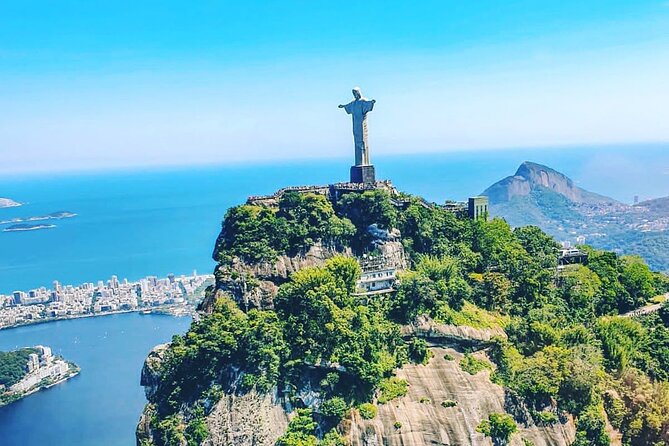
The first major anchor on the route is Corcovado and Christ the Redeemer. Helicopter sightlines change everything here. From the ground, Christ is the focal point and the rest of the city feels secondary. From the air, Christ becomes a landmark inside a bigger story: coastline, bays, and neighborhoods spread out behind it.
What I’d focus on during this section:
- Look for the way the mountain rises out of the urban grid.
- Notice how the coastline curves around the bays and beach districts.
- Try to frame Christ with ocean elements, not just sky. The best photos usually show context, not only the statue.
One timing note: on a flight this short, your best shots come from staying ready. Don’t burn time fiddling with settings when you only get a few minutes per area.
Sugarloaf Mountain: the aerial angle that makes it feel different
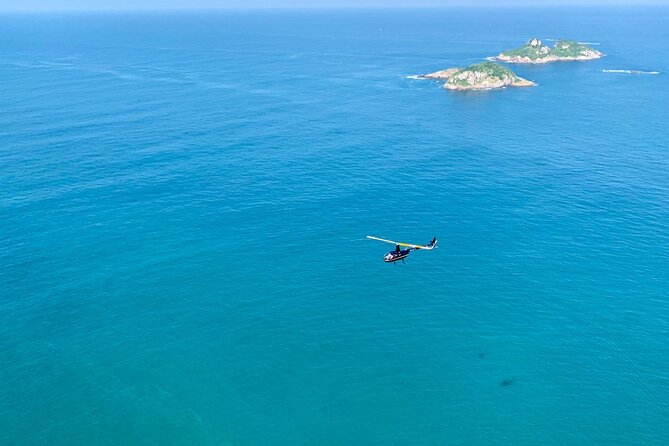
Next comes Sugarloaf Mountain. It’s one of Rio’s most photographed places, but it’s also one of the hardest to truly “read” from a single viewpoint on the ground. From above, Sugarloaf becomes part of the city’s coastline geometry.
From the helicopter, you can often see:
- How the mountain connects to the water’s edge.
- The shape of bays and beach lines that make Rio feel like it was designed, not just built.
- The contrast between steep rock and modern development.
If your goal is a one-shot souvenir image, this is the part of the tour where you should be fully locked in—camera up, strap/holder ready, and no missed moments.
Ipanema, Leblon, Arpoador, Copacabana: the coastline sweep you came for
After the “mountain icons,” the flight shifts to the beach and neighborhood ribbon. You’ll pass over or near Ipanema Beach, Praia do Leblon, Praia do Arpoador, and Copacabana Beach.
Here’s why this stretch is so valuable from the air:
- You understand distances instantly. Rio’s beaches are famous, but from the ground they can blur into one long strip.
- You see the city’s density in real time—buildings, roads, and the ocean meeting without the usual street-level clutter.
- You get that skyline-to-water contrast that makes Rio look cinematic.
A good tactic: choose one “signature” beach framing and stick with it for photos. For example, aim for a shot that includes beach, adjacent buildings, and the curve toward the next neighborhood. It’s more satisfying than separate single-landmark snapshots.
Arpoador shows up twice for a reason
You’ll see Praia do Arpoador in the middle of the circuit and again later. That repetition usually means it sits in a key visual line for the return route. If you’re trying to maximize your photo hit rate, Arpoador is one of the areas where you can afford to be more confident because you’ll likely get more than one clean look.
São Conrado and Barra da Tijuca: the Rio of depth, not just postcard
The route also includes Praia de São Conrado and Barra da Tijuca Beach, plus surrounding areas. These districts can feel more spread out than the classic Copacabana-Ipanema axis, so from above you can really see how Rio changes in character.
What you might notice from this segment:
- The coastline shifts from dense buildings to larger stretches of beach and development.
- The mountains and ridgelines start to feel like they shape the city’s “available space.”
- You get a calmer sense of scale—less like one strip, more like a whole coastal system.
This part is great for travelers who like understanding a city’s physical logic. Even if you don’t plan to visit every neighborhood, you’ll get a sense of where your hotel, beaches, and viewpoints sit relative to everything else.
Pedra da Gávea and Lagoa Rodrigo de Freitas: the non-beach moments that surprise you
Not every great photo in Rio is of a beach. The flight includes Pedra da Gávea and the Rodrigo de Freitas Lagoon area.
Pedra da Gávea: rock dominance from above
Pedra da Gávea is a striking mass of rock. From the ground, you can view it but you may not fully grasp how it sits in the wider terrain. From the helicopter, it becomes a clear visual anchor—how it rises and how it affects nearby lines of development.
If you like “where does that come from” moments, this stop delivers. It adds variety to the circuit so you don’t feel like you’re only watching sand and surf.
Lagoa Rodrigo de Freitas: water contrast
The Rodrigo de Freitas Lagoon segment adds a different texture: calm water and the geometry of the lagoon edges. It’s the kind of view that makes aerial photography feel less repetitive.
This is also one of those segments where your “wow” isn’t just about height. It’s about contrast: mountains, lagoon water, and urban edges all in one frame.
Copacabana’s history and the city’s green: Forte, Jockey Club, Botanical Garden
The later part of the route includes Museu Histórico do Exercito e Forte de Copacabana, plus Jockey Club and the Botanical Garden.
Forte de Copacabana: meaning you can see
Forts are often described as history. From the air, you see something else: location. A fort is a position, and aerial views show why it was built where it was. You can appreciate how the coastline and approaches look from that strategic vantage.
Even if you don’t tour the museum itself during this flight, the flyover helps you understand why it matters on Rio’s map.
Jockey Club and the Botanical Garden: the city isn’t only coast
These inland/near-coast stops broaden the picture. You get proof that Rio has curated spaces and institutions, not just roads and beaches. If your itinerary includes time at gardens, museums, or culture stops, the aerial context will help you recognize what you’re looking at later.
Door-off style planning note: how the route is framed
The route description you’ll see for this type of flight emphasizes a circuit that runs over multiple beach districts and also includes major aerial sights like Christ the Redeemer and the Lagoa area, then returns along the shore.
What that means for you in practice: you’re not getting random flying. You’re getting a structured line designed to keep viewpoints coming in a logical order. That’s important because in a 25-minute flight, there’s no “wandering to find cool stuff” time.
Photos, timing, and what to wear for rotor-noise reality
A short helicopter ride rewards good prep. You can’t control wind or rotor noise, but you can control your readiness.
Here’s what I’d do:
- Bring a phone strap or confirm your smartphone safety equipment is working well before takeoff.
- Keep your camera settings simple. The goal is steady framing, not a complicated workflow.
- Dress for wind and chill. Even when the day is warm, air movement around flights can feel colder.
- If you’re chasing a specific photo (like Christ or Sugarloaf), decide which you prioritize and be ready when that section begins.
Also, pay attention to sky conditions. Clear visibility is a huge part of why people describe these flights as amazing. If clouds roll in, you may still get a cool view, but the sharpness you want for photos can be limited.
Who this tour suits best (and who should skip it)
This experience is best for:
- First-time Rio visitors who want a city overview without a full day of driving.
- People who love photography and want aerial context in a short time.
- Travelers who like small group experiences (this one is capped at 6).
- Anyone who wants a safety-focused, smooth first helicopter experience, especially if you’re nervous about flying.
You might want to skip or choose another option if:
- You’re very budget-sensitive. Helicopter time is premium time.
- You only have one day in Rio and the weather is uncertain enough that cancellation/rescheduling would ruin your plans.
- You’re not eligible under the foreigners-outside-Brazil requirement.
Should you book this Rio helicopter tour with 4FLY RJ?
If you can handle the price and you’re eligible for the program, I think this is a strong booking. The reason is simple: 25 minutes is enough to give you a real map of Rio—not just a quick thrill. You get the big recognizable icons (Christ, Sugarloaf) and the long coastline districts (Ipanema, Leblon, Arpoador, Copacabana, São Conrado, Barra) plus extra variety with places like Pedra da Gávea and Rodrigo de Freitas Lagoon.
I’d book it if you want value in perspective: you’ll leave with a sharper sense of where everything is, and that pays off for beach days, viewpoint hikes, and future planning. I wouldn’t book it as a last-second gamble if the forecast is shaky and you can’t be flexible.
FAQ
What is the duration of the Rio helicopter tour?
The flight time is about 25 minutes.
Where does the tour start and end?
It starts at Av. Ayrton Senna, 2541 – Barra da Tijuca, Rio de Janeiro, and it ends back at the same meeting point.
What is the price per person?
The price is $230.33 per person.
What time window does the activity run?
The listed hours are Monday through Sunday, 9:00 AM to 5:30 PM, within the dates 08/23/2025 to 01/27/2027.
What’s included in the tour?
The tour includes bottled water and smartphone safety equipment.
What’s not included?
Parking fees and private transportation are not included.
Are there any weight limits?
Yes. The total weight per passenger is listed as 265 lbs.
Does the flight require good weather?
Yes. The experience requires good weather, and if it’s canceled due to poor weather, you’ll be offered a different date or a full refund.
FAQ
Is this tour available for everyone visiting Rio?
No. This experience is only for foreigners outside Brazil.
How many people are in a group?
The activity has a maximum of 6 travelers.
What is the meeting point neighborhood?
The meeting point is in Barra da Tijuca.