REVIEW · RIO DE JANEIRO
Rio de Janeiro Helicopter Tour without Doors
Book on Viator →Operated by Rio2Fly · Bookable on Viator
Christ looks different from the sky. This Rio de Janeiro doorless helicopter tour trades long lines for high-altitude views, with you riding out in open air for a real adrenaline hit. Expect a 35–40 minute loop that frames Rio’s beaches, bays, and mountains like a living postcard, with experienced, certified pilots guiding the flight.
I especially like the way the route is built around the big-name icons. You get Christ the Redeemer and Sugarloaf Mountain from angles that are hard to match from the ground, and the coastline views are the kind you keep zooming in on later. The other thing I love is the photo setup: headsets and safety gear help you stay focused, while the open-door format gives you fewer visual blocks when you’re shooting.
One drawback to plan for: this is an open-air experience, so you’ll want to follow the rules (no open shoes and no skirts), and the flight depends on good weather plus air-traffic clearance. If conditions aren’t favorable, you’ll get rescheduled or refunded, so keep some flexibility.
In This Review
- Key things to know before you book
- Why a doorless flight makes Rio feel instant
- The 35–40 minutes: how the timing really feels
- Where you start: Vargem Grande and the no-luggage policy
- What’s included: headsets, safety gear, and your comfort
- Don’t get turned away: clothing and shoe rules
- The route from Recreio to Barra: long beach lines from above
- Joatinga and the cliffs: quiet water with a dramatic frame
- Pedra da Gávea and São Conrado: big rock energy, then upscale coast
- Morro Dois Irmãos and the south zone: the aerial geometry of Rio
- Leblon and Ipanema: beachfront life, seen in one continuous view
- Arpoador at sunset level: the point where two beaches meet
- Lagoa Rodrigo de Freitas: the postcard view, from above
- Botanical Garden and Tijuca Forest: where the city turns green
- Corcovado and Christ: the best kind of close-up
- What to expect with photos and wind
- Is $392.19 worth it for a Rio helicopter without doors?
- Should you book Rio2Fly without doors?
- FAQ
- How long is the Rio de Janeiro helicopter tour without doors?
- Where do I meet for the flight?
- What is included in the tour price?
- Is bottled water or snacks included?
- What clothing rules do I need to follow?
- Is there a weight limit for passengers?
- How many people are on the helicopter?
- What happens if weather is bad?
- What’s the cancellation policy?
Key things to know before you book
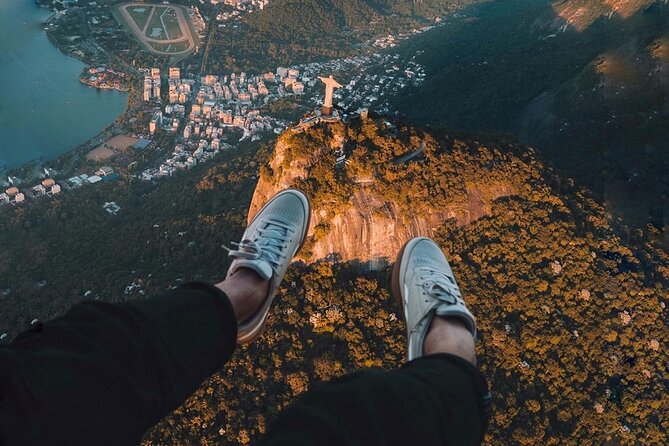
- Doorless, feet/legs out feel: you’ll be in open air for that strong breeze-and-height sensation.
- Christ the Redeemer and Sugarloaf in one ride: two top Rio sights without bouncing between multiple tours.
- Small group size: a maximum of 3 travelers, which usually means less waiting and more direct attention.
- Safety kit included: headsets and safety equipment are provided so you can hear instructions and fly with confidence.
- Weather and air-traffic control matter: flights can be delayed, cleared, or canceled based on conditions.
- Clothing rules are real: open shoes and skirts are not allowed, and luggage stays behind for you.
Why a doorless flight makes Rio feel instant
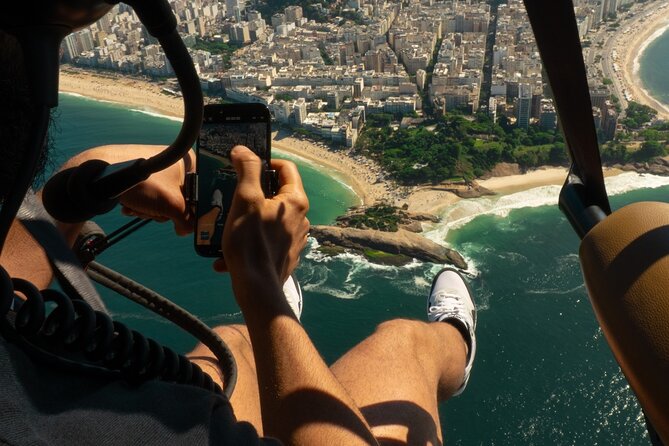
Rio looks like a mash-up of oceans, cliffs, and neighborhoods—and a helicopter is the fastest way to understand how they fit together. From above, the geography stops being “a list of landmarks” and turns into one connected story: beaches curve into bays, hills rise behind districts, and protected green areas break up the sprawl.
The doorless setup is the secret sauce. With the open sides, you don’t just look at Rio—you feel it. The wind hits your face, you notice the sharp scale of the coastline, and you get that quick jolt of height. It’s thrilling, but it’s also practical: fewer barriers means more direct sight lines for photos.
You can also read our reviews of more tours and experiences in Rio de Janeiro.

The 35–40 minutes: how the timing really feels
This is a short flight on purpose. At about 35 to 40 minutes, you’re not stuck watching the same view slide by for an hour—you’re getting a concentrated circuit of highlights. That matters because aerial views move fast. If you try to do this late in the day when your energy is low, you’ll miss the little photo moments: the light on the shoreline, the way beaches change color, and the clean angles over mountain ridges.
One more timing reality: flights are subject to air-traffic control clearance. That means your chosen time is illustrative at first, and the operator confirms the appointment based on what’s available. Plan for a smooth start, but don’t build the rest of your day around a tightly timed domino schedule.
Where you start: Vargem Grande and the no-luggage policy

You’ll meet at R. Dom Bosco, 644 – Vargem Grande, Rio de Janeiro. The good news is it’s listed as near public transportation, so you aren’t forced into only one kind of transport plan.
Also note the luggage rule. Backpacks and bags aren’t allowed on the flight; there’s a place to store them. I’d pack light for the whole day anyway—think phone, camera, a layer for wind, and the essentials you’ll want once you’re back on the ground.
What’s included: headsets, safety gear, and your comfort
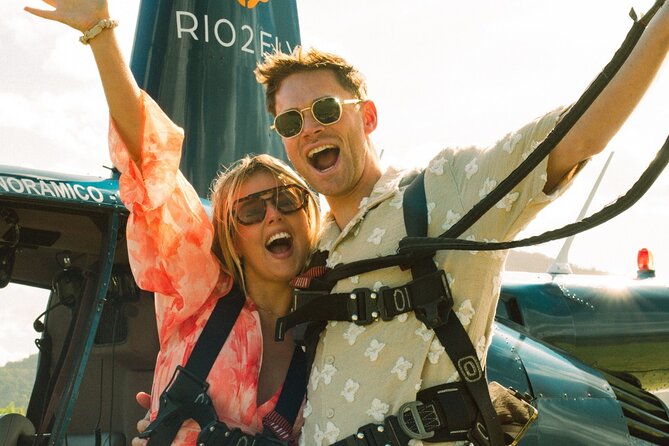
You get headsets and safety equipment. That’s a big deal in a doorless ride, because you’ll hear pilot directions clearly enough to feel in control even with wind noise.
You do not get bottled water or snacks listed as included. If you tend to get a little dry or hungry, bring a plan for that outside the helicopter itself. You’ll also want to dress with the wind in mind—Rio can feel warm on the ground, then turn chilly fast once you’re moving at height.
Don’t get turned away: clothing and shoe rules
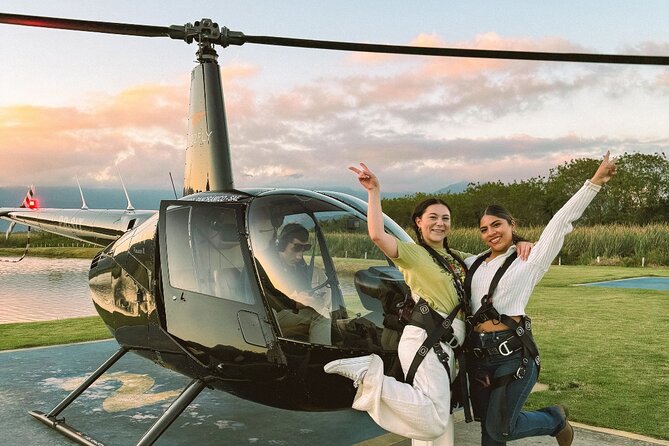
This tour has straightforward rules:
- Open shoes are not allowed
- Wearing a skirt is not allowed
- It’s recommended that hair be tied back
I like rules like this because they keep the experience moving. Just don’t assume that “it’ll be fine.” Bring closed-toe footwear and comfortable clothes you won’t have to fight with during flight.
The route from Recreio to Barra: long beach lines from above
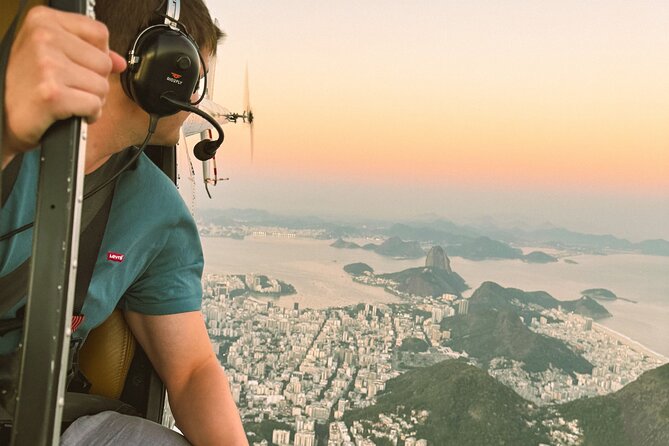
Early in the flight, you head toward Rio’s west-side coastline.
Recreio waterfront is known for its long stretch of golden sand and surf-friendly waves. From above, you’ll see how the beach is shaped by the ocean and why this area feels more spread out than Rio’s famous southern strips. It’s also surrounded by preservation areas like Pedras do Recreio and the Grumari Municipal Natural Park, so you may spot patches of greener land hugging the coast.
Then you move toward Barra da Tijuca Beach, another major stretch of golden sand. The view here helps you understand Rio’s scale. The beaches don’t look like “one place”—they look like connected corridors of sand, water, and vegetation. If you’ve only seen Rio from the ground so far, this is where the aerial perspective really kicks in.
A consideration: because the tour is time-limited, you won’t get long “hover and wait” photo sessions. The benefit is that you’ll always have something new coming up rather than repeating the same angles.
Joatinga and the cliffs: quiet water with a dramatic frame
Next up is Joatinga Beach, described as peaceful, tucked away between impressive cliffs with crystal-clear water. From the air, this stop is about contrast. The shoreline looks more sculpted here than in the wide sandy segments—rock faces and steep edges make the water look even cleaner.
This is the part of the flight where you’ll likely find yourself slowing down your photography. You don’t just take a picture; you try to capture how the beach is “held in” by the terrain.
Pedra da Gávea and São Conrado: big rock energy, then upscale coast

Pedra da Gávea is one of Rio’s iconic formations and tied to one of the city’s most challenging hikes. From above, you can see why it’s so serious: the rock profile looks massive and steep, and the surrounding areas give you a sense of how high and rugged the terrain really is.
Then the flight transitions toward São Conrado, an upscale neighborhood known for its beautiful golden sand beach. This area is popular with surfers, and from the sky you’ll see the waves and the way the shoreline curves. It’s also near notable landmarks like the Olympic Golf Course, which helps give the scene a more “planned city” feel compared with the more wild-looking terrain.
Morro Dois Irmãos and the south zone: the aerial geometry of Rio
Morro Dois Irmãos is where Rio starts looking like a map drawn by nature. The two peaks create a signature silhouette, and from above you can understand the viewpoint: the panoramic sweep over the south zone including beaches like Ipanema and Leblon.
What I like about this portion is how the vegetation looks from the air. Even if you’ve been to Rio before, this is where you notice the green patches climbing up the hills behind the neighborhoods. The city isn’t flat; it’s stacked.
Leblon and Ipanema: beachfront life, seen in one continuous view
When you reach Leblon, the vibe changes to elegant and comfortable, with tree-lined streets and an upscale waterfront. From above, Leblon looks like a tidy segment of the coastline with a clear urban edge.
Then comes Ipanema, famous for its lively beachfront. Aerially, Ipanema isn’t just a beach—it’s part of a continuous shoreline scene that includes bars, restaurants, and the everyday movement along the coast. The waterline and the sand strip make it easy to understand why this area is so “center stage.”
If you’re a photographer, this is where you’ll likely get your best color contrast: ocean shades against the sand, plus the subtle curve of the coast.
Arpoador at sunset level: the point where two beaches meet
Arpoador sits between Ipanema and Copacabana, and it’s especially known as a sunset spot from the ground. From a helicopter, it reads like a natural divider on the map: a visual cue for where one beach personality shifts into another.
Even without planning it for sunset, the position makes it photo-friendly. You can often catch both side-by-side in a single frame depending on how your flight angles line up.
Lagoa Rodrigo de Freitas: the postcard view, from above
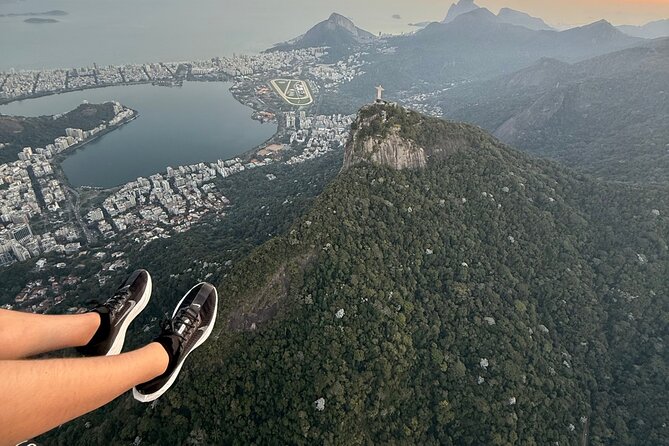
Lagoa Rodrigo de Freitas looks like one of Rio’s most iconic “signature shapes.” From the air, you’ll see the lagoon’s calm water surrounded by green hills and the famous view of Christ the Redeemer in the distance.
This stop is valuable because it adds a different type of scenery. After beach and cliff views, the lagoon gives you a calmer, smoother visual break that makes the whole flight feel more balanced.
Botanical Garden and Tijuca Forest: where the city turns green
Two of Rio’s biggest “how is this in a city?” moments show up here.
Rio de Janeiro’s Botanical Garden gives panoramic views over the lush plant collections and manicured grounds. From above, the garden becomes a pattern of greens and careful structure, and you may even see Christ the Redeemer and surrounding mountains framed beyond it.
Then you move into the Tijuca Forest, described as one of the largest urban forests in the world. From the sky, it’s easier to grasp the scale: you’re not just looking at trees—you’re looking at a large green system in the middle of the city. If the flight angle offers a clear view, you’ll also understand why Pico da Tijuca matters as a high point in this forest area.
The aerial version of forests is quick, but it’s memorable. You see the “why” behind Rio’s reputation for mixing wild scenery with city life.
Corcovado and Christ: the best kind of close-up
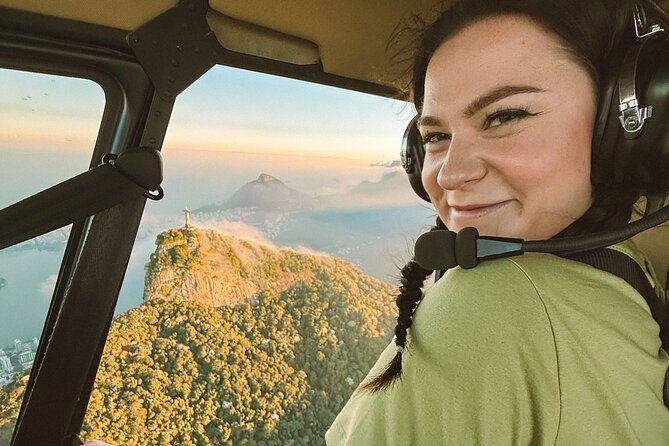
Finally, you get to Corcovado, home to Christ the Redeemer. Corcovado sits at 710 meters above sea level, so when you approach it from the air, the statue reads as a fixed landmark, not just a distant photo target.
This is also where the doorless format shines. With open-air sight lines, you can look down and around the monument area instead of only shooting through barriers. If you’re aiming for photos, keep your camera ready when you’re near the iconic views—this is one of the few moments in the flight where the subject stays clear and recognizable.
I also like that Corcovado isn’t shown alone. Earlier parts of the flight connect the statue area to the rest of the city. So when you see it, you understand how it sits above the ocean, beaches, and neighborhoods.
What to expect with photos and wind
Here’s how to think about photography on a doorless helicopter:
- Wind changes your settings fast. If you’re using a camera, be ready to switch quickly and keep lenses sheltered when needed.
- Your best shots are quick. Don’t try to frame the perfect shot for too long, or the angle will pass.
- Shoot in sequences, not single shots. One tilt or gust can shift the coastline color and shadows.
If you’re lucky enough to get the front seat, you’ll often feel a stronger sense of “clean angle” for iconic landmarks. Even without that, open doors still help because you’re not fighting windows or thick framing.
And yes, it feels adrenaline-heavy in the air. The upside is that it’s short, controlled, and designed to feel safe. Most people leave grinning because they finally “get” Rio’s scale in a way street-level sightseeing can’t.
Is $392.19 worth it for a Rio helicopter without doors?
At $392.19 per person for roughly 35–40 minutes, this isn’t a budget activity. But it can be good value if you care about one thing: seeing the whole city from the most eye-level perspective possible without wasting hours on transfers and lineups.
The value comes from a few practical elements working together:
- The flight duration is long enough to hit big icons and multiple neighborhoods.
- The doorless format improves sight lines, so you get more payoff for the time spent in the air.
- The group limit of a maximum of 3 travelers helps keep the experience less crowded and more personal.
- Safety gear and headsets are included, so you’re not doing extra planning to make it feel comfortable.
One cost-to-think-about: you’re not buying a long photo workshop. You’re buying a fast aerial overview with high excitement. If that matches your style, the price is easier to justify.
Should you book Rio2Fly without doors?
Book it if:
- you want Christ the Redeemer and Sugarloaf in one flight with strong sight lines
- you like adrenaline, open-air views, and photos that look like they belong on a postcard
- you’re comfortable following safety clothing rules and keeping your hair tied back
- you want a small-group experience instead of a big, crowded ride
Skip it or rethink it if:
- you hate wind or motion exposure and prefer enclosed sightseeing
- your schedule is extremely tight and you can’t handle a possible weather reschedule
- you’re traveling with bulky luggage you don’t want to store before the flight
If you’re on the fence, here’s the simplest way to decide: this is one of Rio’s few experiences that changes how you understand the city. From above, the whole place clicks into place fast.
FAQ
How long is the Rio de Janeiro helicopter tour without doors?
It lasts about 35 to 40 minutes.
Where do I meet for the flight?
The meeting point is R. Dom Bosco, 644 – Vargem Grande, Rio de Janeiro – RJ, 22785, Brazil.
What is included in the tour price?
The tour includes headsets and safety equipment.
Is bottled water or snacks included?
No. Bottled water and snacks are not included, and soda/pop is also not included.
What clothing rules do I need to follow?
Open shoes are not allowed, and wearing a skirt is not allowed. It’s recommended that hair be tied back.
Is there a weight limit for passengers?
Yes. The listed total weight per passenger is 254 lbs.
How many people are on the helicopter?
This activity has a maximum of 3 travelers. For reservations for 1 passenger, it’s a shared flight (with additional passengers already scheduled).
What happens if weather is bad?
All flights require good weather. If the flight is canceled due to poor weather, you’ll be offered a different date or a full refund.
What’s the cancellation policy?
You can cancel for a full refund up to 24 hours in advance of the experience’s start time. If you cancel less than 24 hours before, the amount paid is not refunded.