REVIEW · WAIKOLOA VILLAGE
Waikoloa: Big Island Spectacular Helicopter Tour
Book on GetYourGuide →Operated by Blue Hawaiian Helicopters · Bookable on GetYourGuide
A flying view of Hawaii’s fire and water. This Big Island helicopter tour ties volcanic drama to lush coastal beauty, and it even includes an exclusive ground stop at Laupahoehoe Nui for waterfall photos. I especially like the chance to look down on Kilauea’s long-running activity and the fact that you get wide-window helicopter viewing plus headset comfort. One consideration: it’s mostly flying time, with the only real stretch on land being the 20–25 minutes at the remote waterfall stop.
The tour is built around a tight loop that covers black sand country, rainforest valleys, and the Kohala Mountains before returning you to Waikoloa. If you care about geology, I also like that the pilot is there as a live tour guide, with education focused on volcanoes and the islands’ story. The trade-off is the high price tag, so you’ll want to be sure this style of experience fits your trip priorities.
Because this is a small-group operation capped at 6, the vibe tends to feel more personal than big-van sightseeing, and you’ll hear the guide clearly through your headset. I recommend bringing your best camera setup mindset, too, since the highlight is a very photogenic ground moment at a 1,200-foot waterfall.
In This Review
- Key moments that make this tour worth your time
- Big Island helicopter tour: why this route feels like two islands in one
- The helicopter ride details that affect your comfort (and your photos)
- From Kilauea to black sand: what you’ll be seeing in the air
- Hamakua Coast: lush rainforest and waterfalls as a visual reset
- Kohala Mountains valleys: seeing structure, not just scenery
- The Laupahoehoe Nui landing: the 1,200-ft waterfall stop you’ll remember
- Timing and group size: how 105 minutes feels in real trip time
- Price and value: does $719 per person make sense
- Before you go: what to pack and what to avoid
- Who should book this Waikoloa helicopter tour
- Final call: should you book Waikoloa’s Big Island Spectacular?
- FAQ
- FAQ
- How long is the Waikoloa Big Island helicopter tour?
- Is there a landing during the tour, or is it all flying?
- What time do I need to check in?
- Does the tour include headsets and a guide?
- Is transportation to and from the heliport included?
- Can I bring an infant?
- What are the rules for guests over 240 lbs (108 kg)?
Key moments that make this tour worth your time
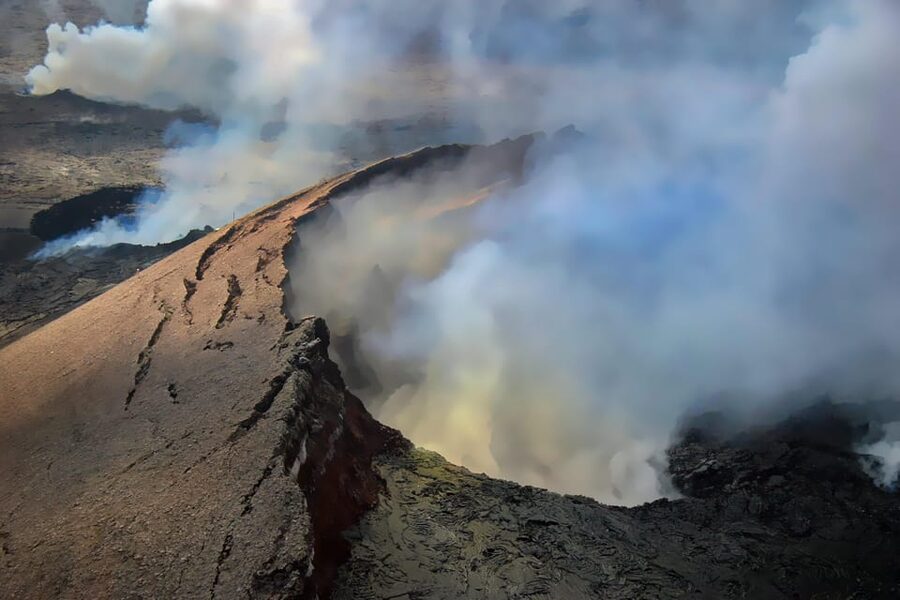
- Kilauea from above: you start with the volcano’s long eruption history and then track the visible effects of the 2018 event.
- Premier helicopter window views: wide viewing windows help you photograph and actually see what the pilot is describing.
- Black sand and Madame Pele country: the flight passes over volcanic badlands and dramatic shoreline scenes.
- Hamakua Coast waterfalls and rainforest: a hard visual contrast to the volcanic terrain.
- Kohala Mountains valleys: you’ll get sweeping views of how the island’s ecosystems stack up.
- A 20–25 minute landing at Laupahoehoe Nui: one remote stop, big payoff for photos and video.
Big Island helicopter tour: why this route feels like two islands in one
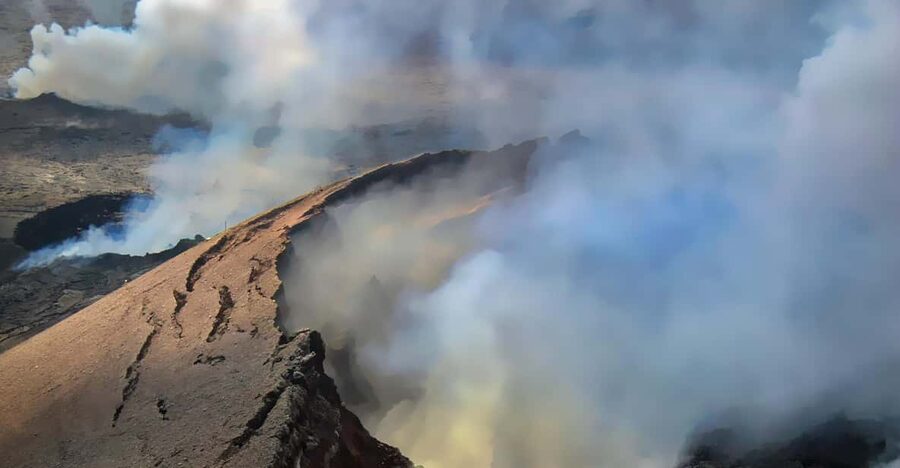
The Big Island can feel like it has multiple personalities. This tour is designed to make that obvious fast. In one sitting, you’ll see what makes Hawaii famous for volcanic power, and then you’ll flip to the gentler side with waterfalls and deep green valleys.
I love how the experience starts with Kilauea, because it immediately sets the tone: the pilot guides you through what you’re seeing while the island’s long-running eruption context is part of the story. Then the route keeps moving, so you’re not stuck looking at one type of scenery for the full time. It’s a useful reminder that Hawaii isn’t just one look. It’s a whole system of changing terrain.
The other thing I like is the landing at Laupahoehoe Nui. A lot of helicopter tours stay in the air the whole time. Here, you get a dedicated stretch on the ground, and that matters for photos, video, and even just the feeling of being there. You don’t just point and shoot from above—you get to stand close to a waterfall moment that’s hard to recreate any other way.
You can also read our reviews of more tours and experiences in Waikoloa Village.

The helicopter ride details that affect your comfort (and your photos)
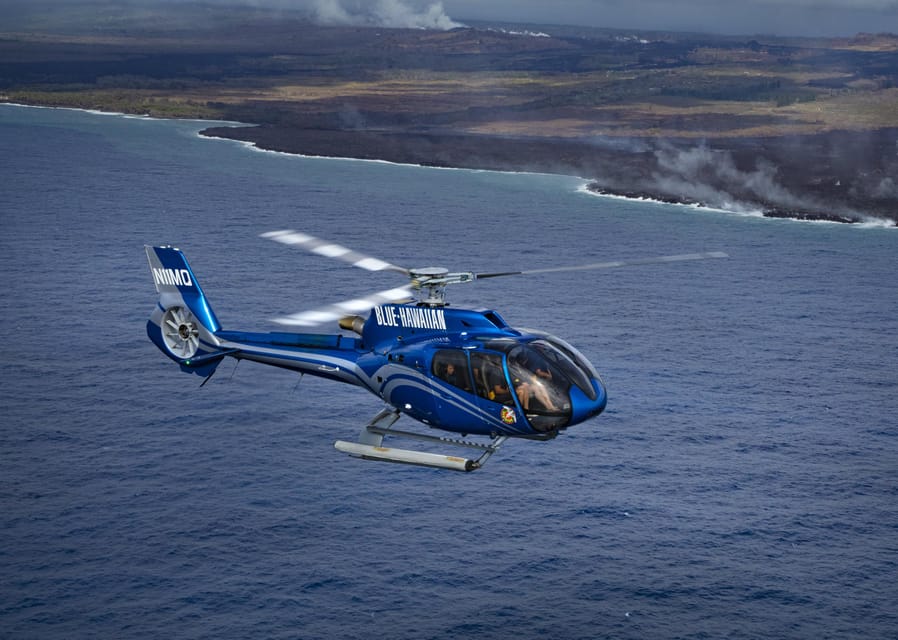
This isn’t a huge cattle-car operation. The group is limited to 6 participants, and the pilot also serves as the live tour guide in English. That small-group size helps in two ways: you don’t have to fight your way to a good viewing window, and your guide’s narration is less likely to turn into background noise.
You also get headsets. That sounds basic, but it really changes the experience. Flying lets sound get drowned out quickly, especially in helicopters, and headsets keep the guide’s volcanic and geology explanations in reach. Even if you’re not studying geology before you go, you’ll still understand what you’re looking at.
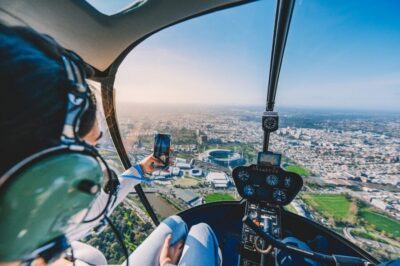
The helicopters are described as premier with wide viewing windows. In practice, this kind of window matters because you’ll want to photograph down at terrain features. Narrow windows force you to shoot through reflections and awkward angles. Wide viewing windows make framing easier, and they reduce the urge to lean or angle too far just to see.
One small but helpful tip: wear dark-colored clothing. The tour recommends it so you don’t reflect in photos. It’s a simple thing, but it can make the difference between clean-looking images and shots where the window reflection or your clothing flashes back at you.
From Kilauea to black sand: what you’ll be seeing in the air
The flight begins with a clear aerial look at Kilauea Volcano, which has been continuously erupting since 1983. That detail is more than trivia. It explains why the terrain you see from above looks the way it does—lava flows and volcanic change aren’t a one-time event here.
As you continue, you’ll also see the dramatic effects tied to the 2018 eruption. From a helicopter, the most compelling part is how the island reads like a diagram of destruction and rebuilding. The black-sand shoreline areas and volcanic regions connect visually: you’re not just seeing one isolated landmark, you’re seeing how different volcanic zones fit together.
The tour also passes over Madame Pele’s volcanic badlands and black sand beaches. These are the kinds of places where the ground looks stripped down, almost raw. From the air, it can feel like you’re looking at a landscape that has been edited by geology—sharp edges, dark tones, and sudden shifts that are hard to grasp from ground level.
If you’re the type who likes to understand context, this portion is where the narration is likely to click. Volcano viewing works best when you know what you’re seeing and why it looks the way it does. The pilot-guide setup here is designed to help you make sense of the visual evidence.
Hamakua Coast: lush rainforest and waterfalls as a visual reset
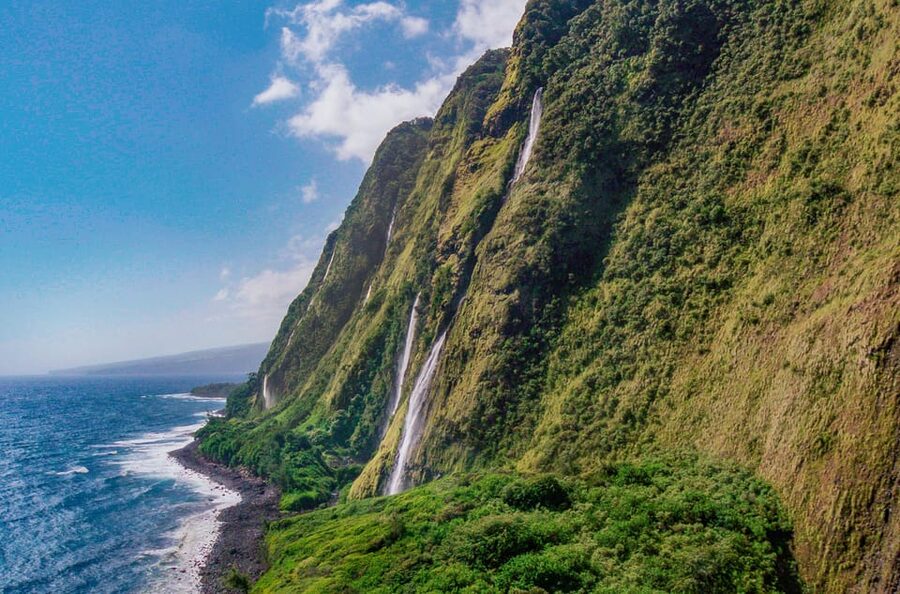
After the volcanic intensity, the route shifts to the Hamakua Coast. This is where the island changes mood quickly. The Hamakua area is known for rich greenery, and from above you’ll see verdant canopy contrasts against earlier darker volcanic terrain.
The description emphasizes cascading waterfalls and the deep green effect of rainforest. I like this segment because it gives you a balance of texture and color. Lava country can be mostly dark, jagged, and stark. Rainforest and waterfalls add softer layers: gradients of green, flowing water corridors, and a sense of scale that feels different from the volcanic features.
From a photo perspective, this part of the flight is often where you’ll get the most forgiving images. Water and vegetation tend to reflect light more naturally than bare volcanic ground. So if you’re concerned about camera settings, this segment can help you reset and reframe.
Kohala Mountains valleys: seeing structure, not just scenery
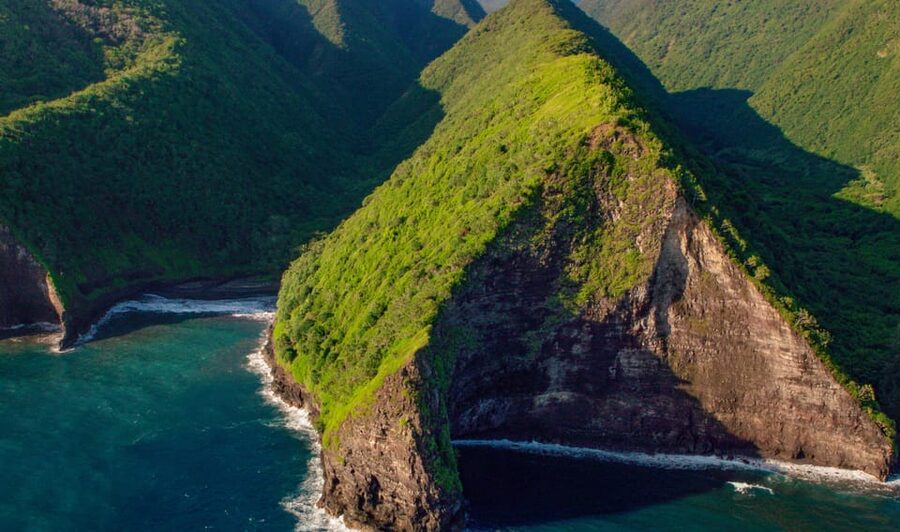
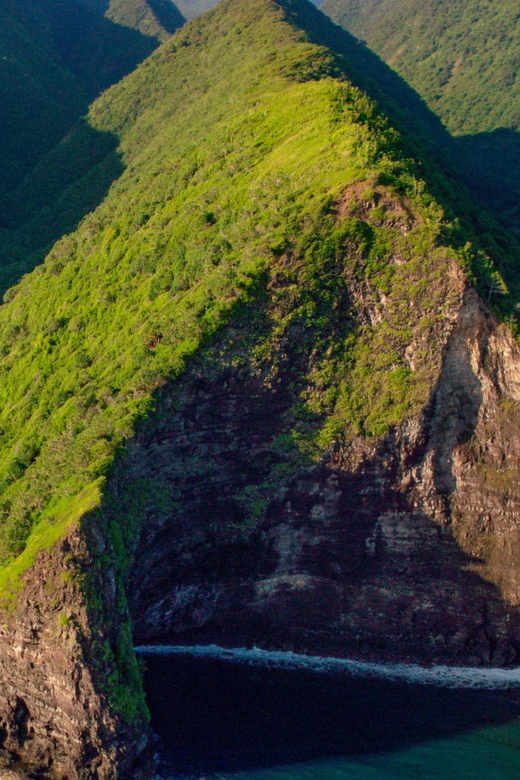
Next comes the Kohala Mountains, described through views of meandering valleys and varied ecosystems. This is a key stretch because you’re no longer only chasing dramatic single features. You’re reading the island’s structure.
From the air, the Kohala region helps you understand how terrain funnels water, how valleys cut through different zones, and how the island’s ecosystems stack across elevation and exposure. The tour’s route focus here is smart for first-time Big Island visitors, because it teaches the geography without requiring hiking time.
If you’re traveling with someone who thinks helicopters are just for thrill seekers, this segment is where you can gently win them over. Views of valleys and ecosystem patterns are the kind of visual logic that makes a flight feel educational, not just scenic.
The Laupahoehoe Nui landing: the 1,200-ft waterfall stop you’ll remember
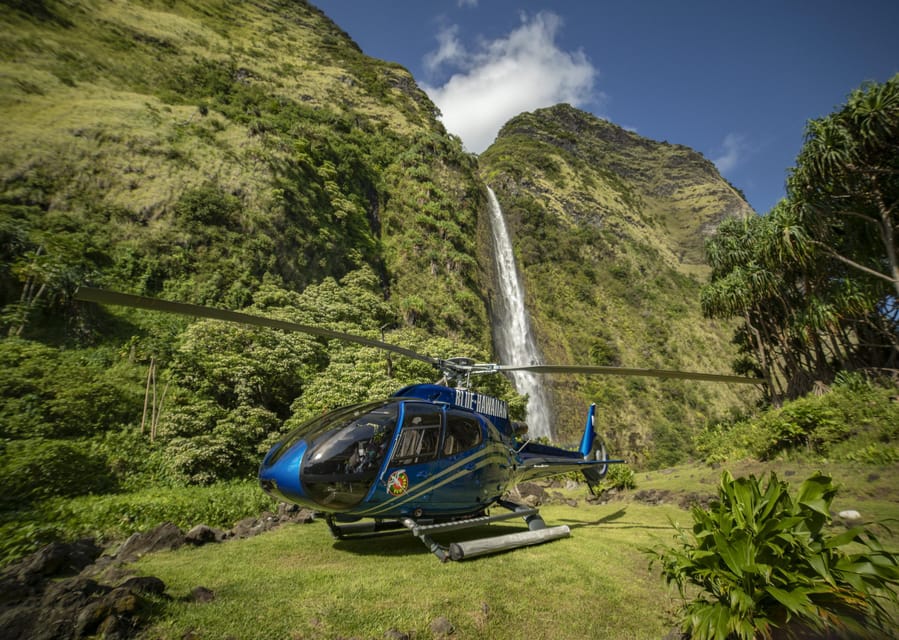
Here’s the moment that makes this tour stand out: an exclusive landing at Laupahoehoe Nui on the Kohala Coast. You’ll spend 20–25 minutes on the ground at this remote location.
That’s not just for a quick photo. It’s enough time to get the shots you want, record a bit of video, and actually take in how a waterfall looks from close range instead of through a helicopter window. The tour specifically highlights a majestic 1,200-foot waterfall, and that kind of height tends to create a sound and mist effect you can feel in your body more than you can in your camera.
This stop is also valuable because it breaks up the flight. Helicopters can feel like an unbroken stream of views. Having grounded time lets your brain catch up. It also helps with travel memory: later, you won’t just recall the island from above. You’ll recall the exact moment you stood near the waterfall.
One practical consideration: it’s a remote spot, and your time there is limited to that 20–25 minute window. If your group includes anyone who tends to get slow with photos, plan ahead mentally. Assign roles (someone shoots, someone watches the guide, someone checks the group) so you don’t lose the best light waiting on the perfect frame.
Timing and group size: how 105 minutes feels in real trip time
The total flight time is listed as 105 minutes, usually around two hours. That’s a strong length for covering multiple regions without dragging into half a day. You’ll get enough time to experience different terrain types, yet it remains a feasible add-on to a Big Island itinerary.
But do factor in check-in. You’re told to arrive 60 minutes prior to tour time. Late arrivals may not be accepted and can be non-refundable. In other words, show up early enough that you’re not rushing through parking, check-in lines, or finding the heliport.
With the group capped at 6, boarding should feel more streamlined than larger tours. Still, helicopter seating is tight compared to bus rides, so arriving calm helps your experience start smoothly.
Price and value: does $719 per person make sense
At $719 per person, this isn’t a budget activity. The question isn’t just whether it’s expensive. It’s whether you’re paying for something you can’t get elsewhere.
Here’s what you’re buying:
- A focused aerial route that ties together Kilauea’s eruption history, black sand and volcanic badlands, Hamakua’s rainforest, and the Kohala Mountains.
- Premier helicopters with wide viewing windows plus headsets, which improves both comfort and photo results.
- A real ground landing at Laupahoehoe Nui for 20–25 minutes, featuring a 1,200-foot waterfall.
If you’re already planning to do major Big Island activities like long drives, hiking, and beach time, a helicopter tour can feel like an extra splurge. But if your travel style values efficient, high-impact views, this cost starts to make more sense. You’re paying for time saved and access to viewpoints that would be difficult, time-consuming, or impossible to replicate in one day by car.
I also think the small-group cap at 6 matters for value. When the helicopter isn’t packed, you get more usable window time and a more personal guide experience. That’s part of what you’re paying for at this price level.
Before you go: what to pack and what to avoid
The tour includes headsets, so you don’t need to bring audio gear. Beyond that, treat it like a camera-and-comfort outing.
- Wear dark-colored clothing to reduce reflections in photos.
- Wear clothing you’re comfortable in near a helicopter. The flight is short and intense, so you don’t want to spend your attention fighting discomfort.
- Bring your camera plan: this tour is built around looking down and looking forward, plus a ground waterfall stop.
One health rule you should take seriously: no scuba diving within 24-hours of tour departure. If scuba is part of your plan, build a buffer so you’re not stuck rearranging your day.
Who should book this Waikoloa helicopter tour
This tour is a great match if you:
- Want a Big Island experience that mixes volcano views and waterfall time without spending the whole day on the road.
- Like geology and want the pilot-guide explanation to give meaning to what you see.
- Prefer small-group experiences over crowded sightseeing.
- Are visiting for a shorter stay and want the island’s major zones in one loop.
It might not be the best match if you’re looking for multiple long ground stops. The standout land time is at Laupahoehoe Nui. Otherwise, you’ll be in the air for the duration.
Also consider the weight seating rule. For each guest weighing over 240 pounds (108 kg), you’ll need an adjacent empty seat for aircraft balance, and the second seat charge is half off the regular tour price. Plan for that early so your booking aligns with the requirement.
Final call: should you book Waikoloa’s Big Island Spectacular?
I think this is a strong book for the right traveler. If you want a single activity that shows Kilauea’s volcanic power, Hamakua’s rainforest contrast, and a memorable waterfall landing, this tour is built for that goal. The combination of wide-window viewing, headset comfort, and a real 20–25 minute stop at Laupahoehoe Nui is what makes it feel worth its premium price.
I’d skip or at least rethink it if your budget is tight or if you’re expecting a schedule with multiple lengthy landings. This is mostly about the flight. The payoff is that one remote ground moment, plus the visuals that come before it and after it.
FAQ
FAQ
How long is the Waikoloa Big Island helicopter tour?
The duration is listed as 105 minutes, about 2 hours.
Is there a landing during the tour, or is it all flying?
There is an exclusive landing at Laupahoehoe Nui, with 20–25 minutes on the ground.
What time do I need to check in?
Check-in is 60 minutes prior to tour time. Late arrivals may not be accepted and are non-refundable.
Does the tour include headsets and a guide?
Yes. Headsets and a pilot guide are included.
Is transportation to and from the heliport included?
No. Transportation to and from the heliport is not included.
Can I bring an infant?
Infants up to 23 months must sit on laps and are free of charge.
What are the rules for guests over 240 lbs (108 kg)?
For each guest over 240 lbs, an adjacent empty seat is required to safely balance the aircraft. The second seat is half off the regular tour price, and you’re asked to arrange the additional seat after booking.