REVIEW · KATHMANDU
Guaranteed Landing at Everest Base Camp Kalapathar by Helicopter
Book on Viator →Operated by Himalaya Holiday service Pvt. Ltd.(HHS) · Bookable on Viator
Everest Base Camp, minus the slog. This helicopter experience is built for one goal: getting you to Everest Base Camp and Kalapathar quickly, with a guaranteed window seat for the mountain drama. You also get round-trip hotel transport by car, so your biggest job is showing up early and staying calm when the altitude hits.
What I especially like is how time-efficient it feels. You reach about 17,700 feet (5,400 m) by helicopter, then you spend real time exploring and photographing, rather than losing hours to trekking routes. The second thing I like is the clear structure: a short early transfer, scheduled stops, and a flight plan that prioritizes views.
One consideration: this is weather-dependent. If conditions are poor, the trip can be rescheduled or refunded, and you should be ready for that reality.
In This Review
- Key things that make this Everest trip work
- Why Kalapathar by helicopter is a different Everest day
- The morning grind in Kathmandu: tight timing, clear steps
- Getting to Lukla/Lulka: the quick fuel stop that keeps the plan on track
- Sagarmatha National Park stop: Hotel Everest View time for a real reset
- The altitude moment: reaching 5,400 m and landing near Base Camp
- Syangboche Marg / Hotel Everest View: a second chance to get it right
- The return to Kathmandu: smooth ending, not an all-night saga
- Price and value: what $3,500 buys (and what it doesn’t)
- Seats, group size, and what the cap means for your comfort
- Weather and gear: your success depends on conditions and preparation
- Who should book this helicopter Everest trip
- Should you book Everest Base Camp and Kalapathar by guaranteed landing helicopter?
- FAQ
- How long does the helicopter tour take?
- Do I get pickup and drop-off from my hotel?
- Is a window seat guaranteed?
- Where do you stop on the way?
- Is food included?
- What entrance fees do I need to pay?
- What’s the weight limit per passenger?
- What happens if weather is bad?
Key things that make this Everest trip work
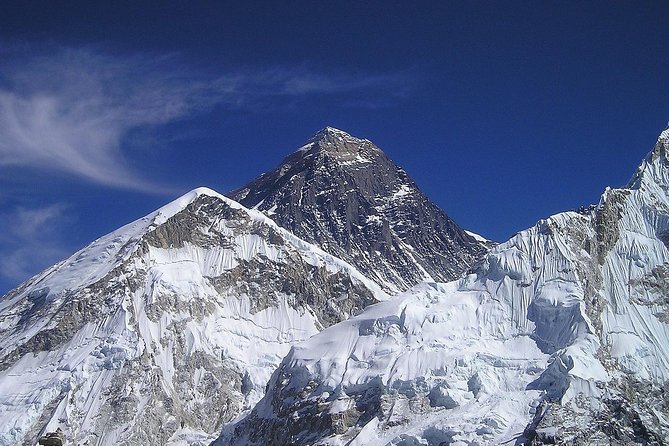
- Guaranteed window seat for prime photo angles during the flight to the Everest region
- Kalapathar landing so you’re not just viewing Everest Base Camp from far away
- No trekking requirement to reach high altitude (you still respect altitude once you’re there)
- Short Lukla/Lulka fuel stop keeps the schedule tight
- Expert pilot plus small-group cap (up to 15 travelers) helps it feel organized
- Hotel pickup and drop-off removes a big chunk of day-of stress
Why Kalapathar by helicopter is a different Everest day
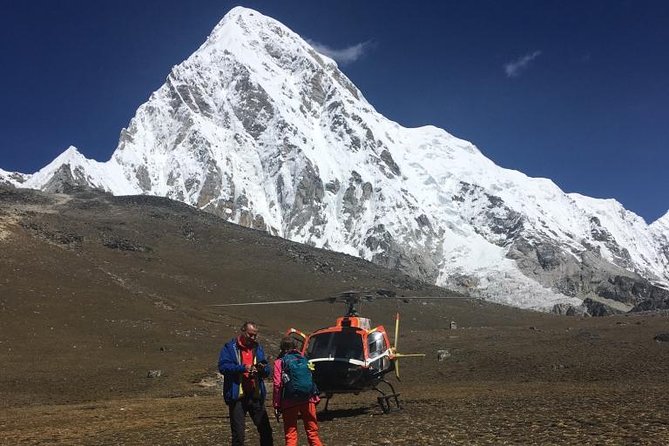
Kalapathar is famous for a reason: it’s one of the best spots to frame Everest in a way you can actually absorb. From a helicopter, you’re not “watching Everest from a distance” for hours. You’re landing close enough to Base Camp territory, then spending about an hour on the ground for photos and quick exploring.
Even if you’ve seen Everest photos before, there’s a shift when you’re that high and that close. Your brain stops treating it like a postcard mountain and starts treating it like a real place with real scale.
The smart part of this tour is that it trades physical effort for time and planning. You don’t break a trail for days. You invest in a tight window—then you make that window count.
You can also read our reviews of more tours and experiences in Kathmandu.
The morning grind in Kathmandu: tight timing, clear steps
You start early—around 6:00 AM with hotel transfer to the Kathmandu airport or helipad area. Check-in is scheduled shortly after, and you’ll need a passport copy (it’s explicitly requested). This matters because helicopter departures are not the time to hunt for documents.
The total day feels compact: about 3 to 4 hours overall, with about 3 hours of flight time. That short format is a big reason people choose this. You’ll still feel the early wake-up, but you won’t lose your whole day to travel and delays.
Also, car transfers are included. That sounds small until you’ve tried to coordinate Kathmandu transport at dawn. This one reduces the chaos.
Getting to Lukla/Lulka: the quick fuel stop that keeps the plan on track
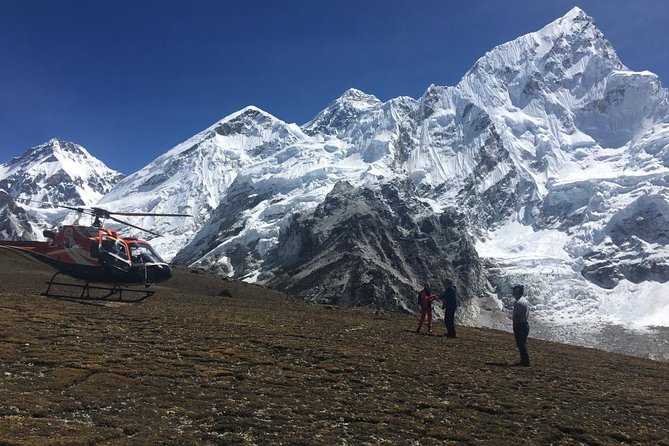
On the way up, you’ll fly to the Everest region via Lukla/Lulka (often referenced in two spellings). The schedule includes about 50 minutes from Kathmandu to Lukla/Lulka, then a very short 10-minute stop to drop return fuel.
That fuel stop is why the day stays short. It’s not there for sightseeing or meals. It’s there to make sure you get the return timing you paid for.
Here’s what you should do with this moment: use it to prepare mentally. You’ll be trading comfortable airport waiting for a high-altitude environment soon after, even if the aircraft keeps things smooth.
Sagarmatha National Park stop: Hotel Everest View time for a real reset
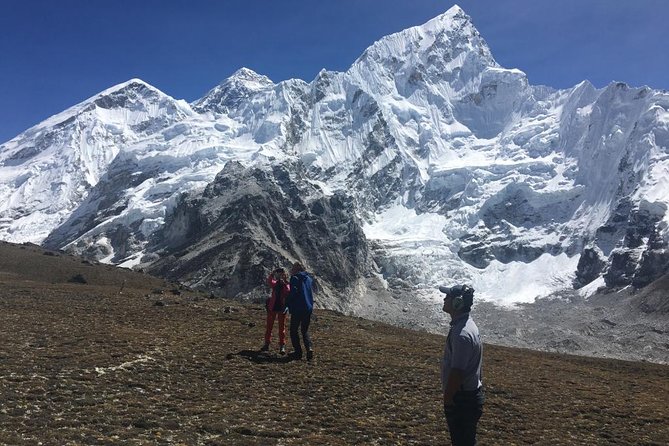
You get time in the Sagarmatha National Park area, with a stop at Hotel Everest View for about an hour. This is one of the best parts of the schedule for people who don’t want the day to feel like a nonstop rush.
The big perk is that it’s a built-in buffer. You can eat, hydrate, use the restroom, and breathe before the Base Camp landing phase.
Breakfast is described as optional, including an optional Himalaya breakfast with extra cost for food and drinks paid locally. That means you should treat meals as a separate cost, not something automatically included.
The drawback here is simple: you still won’t have hours to linger. This is Everest in a helicopter format—use the stop efficiently.
The altitude moment: reaching 5,400 m and landing near Base Camp
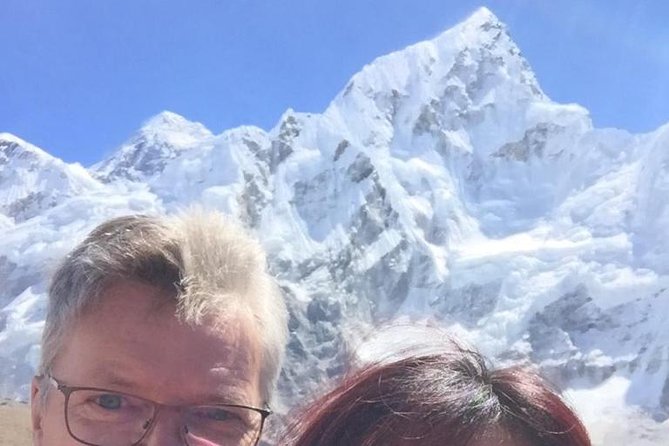
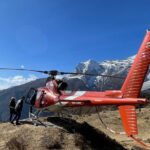
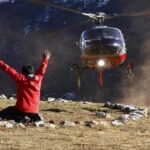
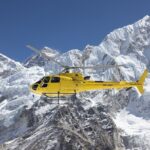
This is the main event. After the earlier segments, you reach about 17,700 feet (5,400 m) by helicopter, then you explore Base Camp and Kalapathar for photos and videos of a lifetime experience.
You’ll be on the ground for about an hour to soak it in. That time matters because altitude and weather can change quickly. One hour is usually enough for the big photo shots and a careful look around, without turning this into an exhausting “adventure hike.”
Altitude is still real here. Even though you’re not trekking up, being at that elevation can feel different—breath may come faster, and you may want to move slowly. I’d treat the first minutes at altitude like your body is reading a new set of instructions.
Also, the tour emphasizes Kalapathar views as the best view option in the Base Camp area. If you care about framing Everest in your photos, this stop is the reason the tour exists.
Syangboche Marg / Hotel Everest View: a second chance to get it right
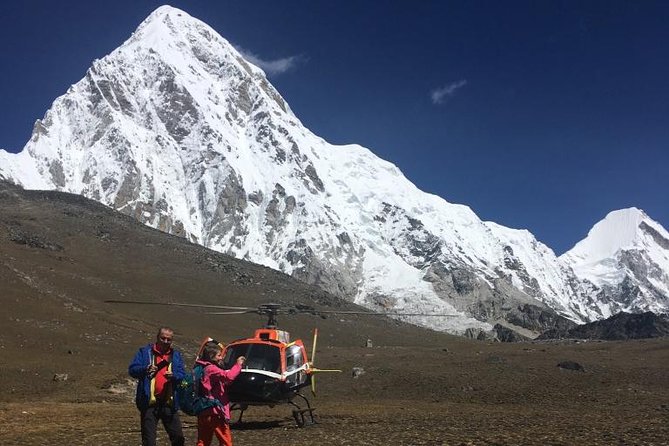
The route includes another stop described around Syangboche Marg, with an Hotel Everest View time of about an hour, again with optional breakfast.
Why do a second hotel-area stop? It helps balance the day. It gives you an additional chance to reset, adjust to conditions, and handle any last-minute needs before the final return flight.
Is it necessary? Not always. But it tends to make the overall experience feel less like a single straight shot and more like a managed plan with breathable checkpoints.
If you’re the kind of traveler who wants time for photos, this timing can be a plus. You’re not forced to commit to everything in one hectic segment.
The return to Kathmandu: smooth ending, not an all-night saga
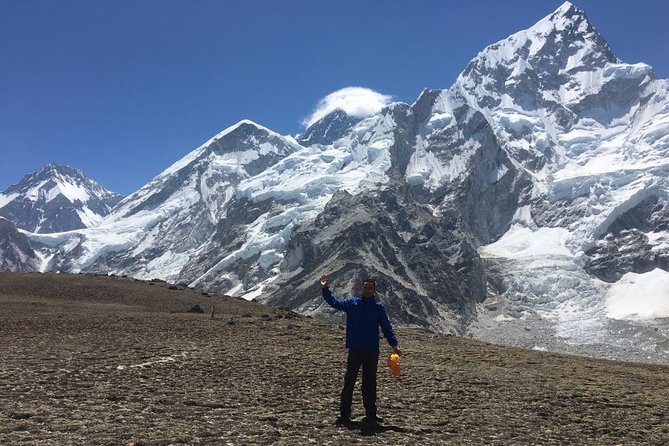
The day closes with the return flight back to Kathmandu, then a car drop to your hotel after the flight. It’s designed so you’re not stuck in Kathmandu late at night afterward.
One small thing I like in tours like this is that the structure reduces decision fatigue. You don’t spend your time guessing where to go next. You follow the schedule, focus on the views, and get back to normal life fast.
If you’re planning a meal after the tour, do yourself a favor and keep it simple. With altitude + early departure, your body will appreciate basic, familiar food more than a big culinary adventure.
Price and value: what $3,500 buys (and what it doesn’t)
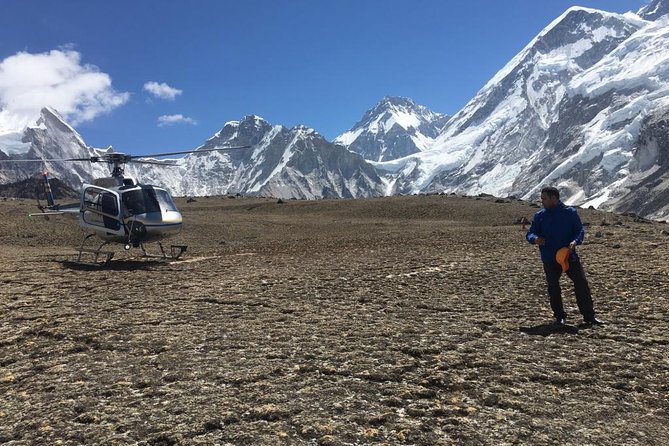
At $3,500 per person, this is not a budget Everest option. The value is in three places:
First, you’re buying a time shortcut. Trekking to the Base Camp and especially reaching Kalapathar is a multi-day, sometimes multi-week effort. Here, you’re compressing a massive commitment into a few hours.
Second, you’re paying for the experience of landing and looking up at Everest territory with less physical wear. The tour explicitly sells the idea that you can reach the area without breaking a sweat—and that’s accurate in the sense that there’s no long hike included.
Third, logistics are handled: hotel pickup/drop, helicopter routing, and a managed plan with scheduled stops.
Now the costs that often surprise people:
- Food and drinks: USD 35 each (so dining can add up quickly)
- Jackets, trousers, sun-glasses etc. are not included
- National park entrance fee: $55 per person
There’s also an optional guide service, and you may choose to add that depending on how much context you want while you’re on the ground.
My practical take: this tour makes sense if you’re trying to balance one or more constraints—limited vacation time, limited physical ability, or you simply want the helicopter-only version of the Everest day. If you’re flexible and want a cheaper Everest pathway, a trek will usually win on price. But if the goal is Base Camp + Kalapathar quickly with minimal effort, the price starts to feel more rational.
Seats, group size, and what the cap means for your comfort
Even though this is positioned as a private helicopter experience, the details say you’ll join a helicopter with an expert pilot, and the tour has a maximum of 15 travelers. Translation: you’re not alone in the sky, but you’re in a small group.
The biggest comfort win is the guaranteed window seat. That one detail alone changes the whole experience. Everest views are fragile—clouds, angle, and timing matter. With a window seat locked in, you can stop worrying about who gets the best view and just plan your photos.
Also note the tour lists total weight per passenger: 276 lbs. That’s important. If you’re near that number, confirm before booking so there are no last-minute issues.
Weather and gear: your success depends on conditions and preparation
This experience requires good weather. That’s not a marketing line—it’s what controls whether you fly and whether you can land as planned. If it’s canceled due to poor weather, you should expect either a different date or a full refund.
So what can you control? Plenty, mainly your comfort:
- Dress for cold. Even when the helicopter feels quick and smooth, altitude stays cold.
- Bring appropriate layers. The tour doesn’t include jackets or trousers.
- Protect your eyes with proper sunglasses.
Because you’re reaching 5,400 m, I’d also plan to move slowly once you land and avoid getting overly energized right away. You want your body focused on staying comfortable, not panicking.
Who should book this helicopter Everest trip
This is a strong match if:
- You want Everest Base Camp and Kalapathar without a long trek
- You’re short on time and want a 3 to 4 hour Everest hit
- You value photography and want that guaranteed window seat
- You’re traveling with a group (the tour notes group discounts)
It may be less ideal if:
- You’re extremely price-sensitive
- You hate early starts (you’re leaving around 6:00 AM)
- You’re not willing to accept weather changes and possible rescheduling
It’s also a good choice if you want the spiritual and emotional impact of Everest, but you’d rather spend your energy on experiencing the place than earning it through days of hiking.
Should you book Everest Base Camp and Kalapathar by guaranteed landing helicopter?
If your heart is set on standing in Everest Base Camp territory and getting Kalapathar’s angles, and you want to do it with minimal physical effort, I think this is an easy yes. The value is strongest when you’re protecting time and reducing stress—hotel pickup, managed stops, and that guaranteed window seat.
Before you hit book, do two reality checks:
1) Confirm you can handle a very early departure and colder high-altitude conditions. Bring proper layers since key cold-weather items aren’t included.
2) Be okay with weather risk. Since good weather is required, you should choose dates that have some flexibility.
If those points work for you, this is one of the most efficient ways to experience Everest up close—without turning your vacation into a long trek.
FAQ
How long does the helicopter tour take?
The experience is listed as about 3 to 4 hours total, with approximately 3 hours of flight time.
Do I get pickup and drop-off from my hotel?
Yes. The tour includes round-trip transfer by car, picking you up from your hotel and dropping you back after the flight.
Is a window seat guaranteed?
Yes. You’re guaranteed a window seat during the flight.
Where do you stop on the way?
There’s a short stop at Lukla/Lulka for about 10 minutes to drop return fuel, and you also have stops around the Everest area, including time at Hotel Everest View and a stop described on Syangboche Marg.
Is food included?
No. Food and drinks are not included, and the tour lists USD 35 each. Breakfast options at Hotel Everest View are also optional and cost extra if you choose them.
What entrance fees do I need to pay?
You’ll need to pay the National park entrance fee listed as $55 per person.
What’s the weight limit per passenger?
The tour lists a total weight per passenger of 276 lbs.
What happens if weather is bad?
This experience requires good weather. If it’s canceled due to poor weather, you’ll be offered a different date or a full refund.