REVIEW · KATHMANDU
Everest Base Camp Helicopter Tour with Hotel Everest View Landing
Book on Viator →Operated by Everest Experience and Assistance · Bookable on Viator
A helicopter ride to Everest feels unreal. This Everest Base Camp helicopter tour pairs Kathmandu convenience with Himalayan views so you can cut the long trek and still get serious altitude drama. You’ll fly over classic Everest scenery, with glimpses of Everest country villages and farmland along the way.
I like two things a lot: the Hotel Everest View breakfast stop and the fact the group stays small (max 5). That combo makes the day feel more controlled, with less crowding and more time to take in the view and regroup if plans shift.
One possible drawback: the whole itinerary depends on weather, and timing can change. The breakfast stop can be optional if conditions aren’t right, and your return flight may run late while you wait for a safe window.
In This Review
- Key things that stand out on this Everest helicopter day trip
- Everest Base Camp by helicopter: why Kala Patthar is the star
- The early Kathmandu pick-up and the Hotel Everest View breakfast stop
- Lukla refuel: a 20-minute stop with real Khumbu energy
- Flying over Everest: what the route actually gives you
- The closest views: about 15 minutes near Kalapatthar
- When weather is good, it’s magic. When it’s not, you wait.
- Price and what you actually get for $1,490 per person
- Who should book this Everest helicopter tour (and who should rethink it)
- Should you book Everest Base Camp by helicopter with Hotel Everest View landing?
- FAQ
- What time does the tour start?
- How long is the helicopter experience?
- Do they pick me up and drop me off in Kathmandu?
- Is there a helicopter landing at Everest Base Camp itself?
- How long is the breakfast stop at Hotel Everest View?
- How long is the stop at Lukla?
- Where do you get the closest views for photos?
- Is the tour a small group?
- Are food and drinks included?
- What costs should I expect besides the tour price?
Key things that stand out on this Everest helicopter day trip
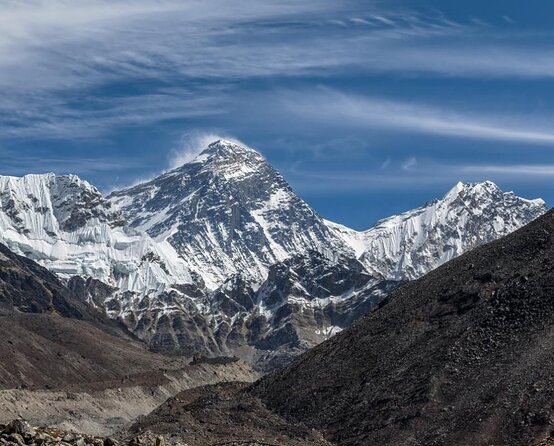
- Small group size (up to 5) keeps the day calmer and support easier if something changes.
- Hotel Everest View breakfast with an Everest-facing backdrop gives you a real foothold on the mountain experience.
- Kala Patthar landing logic means you’re aiming for the closest practical touchdown spot, not a fantasy “Base Camp” pad.
- Close window time for photos/videos helps you actually capture the mountains, not just the clouds.
- Route includes a Lukla refuel stop so you get one more guaranteed moment of the Khumbu in motion.
Everest Base Camp by helicopter: why Kala Patthar is the star
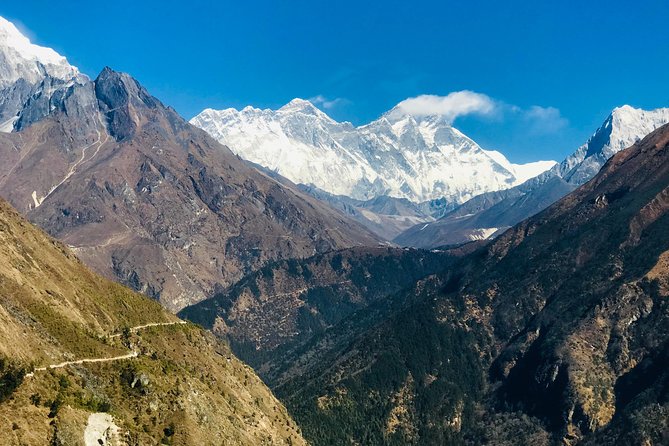
Here’s the reality check that helps you set expectations: there isn’t a standard helicopter landing pad at Everest Base Camp. So when you book a tour that promises the closest possible experience, the plan is built around a nearby, practical landing area—Kala Patthar.
That matters because “close” in the Everest region isn’t just marketing. It’s physics and logistics. From Kala Patthar height you get strong, dramatic perspectives of Everest and the surrounding ridges, and you get window views that feel far more immediate than looking from a distance in Kathmandu or even from ground viewpoints that require serious hiking.
Also, this tour is designed for people who can’t (or don’t want to) spend roughly two weeks walking to Everest Base Camp. Instead, you’re trading walking effort for concentrated flight time and quick stops—short, focused, and built around the best chance of clear views.
If you’re expecting a relaxed stroll at Base Camp itself, you’ll likely be disappointed. If you want the “wow” of seeing Everest terrain up close without the multi-day trek, you’re in the right place.
You can also read our reviews of more tours and experiences in Kathmandu.
The early Kathmandu pick-up and the Hotel Everest View breakfast stop
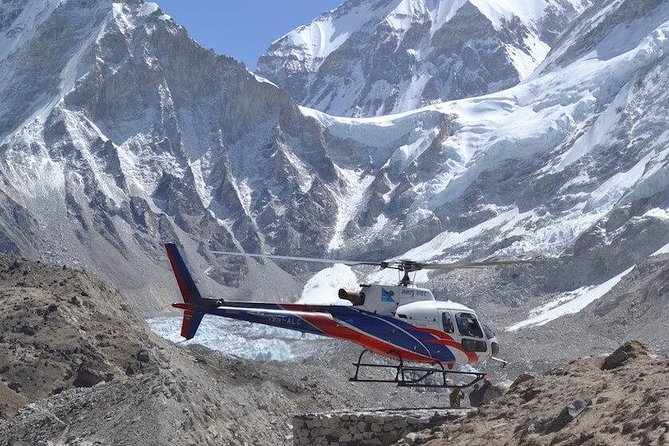
The day starts early—6:15 am—with pickup arranged from your Kathmandu hotel and round-trip drop-off back at your hotel. This is one of the most valuable pieces of the day: no self-navigating in rush-hour traffic, no guessing where to check in, and fewer moving parts for a short 5-hour window.
Your first real mountain moment is a stop at Hotel Everest View (about 30 minutes for breakfast, plus time built into the stop). The idea is simple and smart: start your Everest experience with food and a view, while conditions are still likely to be favorable.
Important nuance: the breakfast stop is described as optional depending on weather. If visibility is poor at the planned hotel viewpoint, the team may shift the location. In other words, they’re not forcing a scenic meal into a bad-visibility scenario. This is exactly how you want it handled, even if it means you don’t always get your perfect photo angle at that specific spot.
This stop also tends to be where you’ll feel the difference between “I booked a helicopter” and “I actually visited Everest viewpoints.” Breakfast gives you a pause. It’s not just a photo stop; it’s a reset point.
Lukla refuel: a 20-minute stop with real Khumbu energy
After the Everest View Point portion, the plan includes a stop at Lukla for refueling—around 20 minutes. The itinerary notes that the admission ticket at Lukla is free for this stop, so you’re not looking at extra on-the-spot costs just to make the connection work.
Why is Lukla part of a helicopter day? Because this is how routes are managed in the region—fueling stops happen. Even though it’s brief, it’s still part of the “moving through the Khumbu” feeling: you get a sense that you’re not just jumping from Kathmandu to Everest and back.
If you’re the kind of traveler who likes structure—set times, known stops—this quick refuel break is helpful. It makes the day feel like a planned flight itinerary rather than a waiting game with no anchors.
Flying over Everest: what the route actually gives you
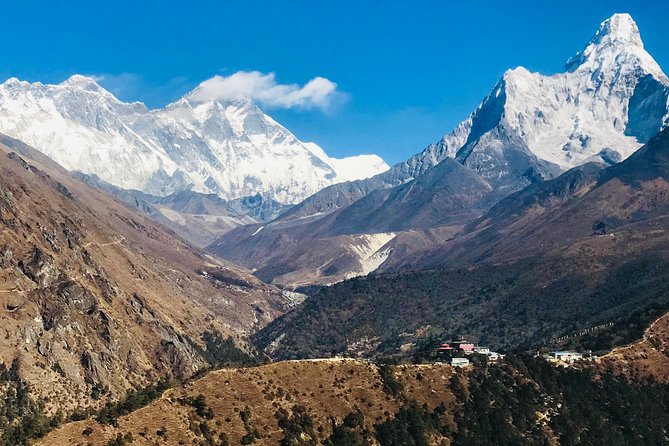
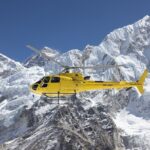
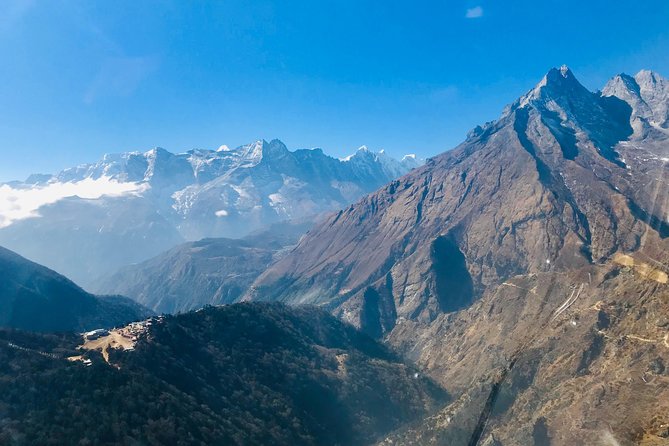
Once you’re up in the air, the tour’s core promise kicks in: a flight through the Himalayan region with views of the Everest area, plus overflights connected to classic viewpoints.
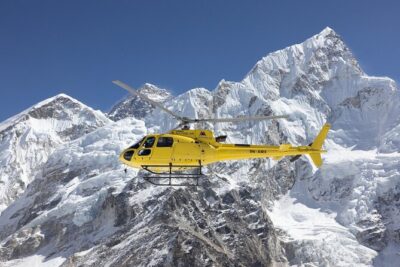
The itinerary emphasizes flying over or near key areas such as Kalapatthar and Everest Base Camp, plus the broader Everest region. You’re also told you’ll see remote villages and lush farmland along the route. That part matters because helicopters can feel like a “point to point” experience, but this design aims to give you that layered geography—habitation and valley life, then the stark high-mountain look.
There’s also an explicit note about flying from Phriche toward Everest Base Camp and up to Kalapatthar height. For you, that translates into the feeling of gradually moving from valley-to-alpine views, rather than a sudden jump where everything looks the same.
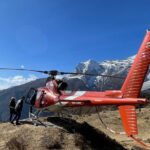
And yes: the tour highlights that you can take photos and videos from the helicopter window closely. That’s not a throwaway line. On a day like this, the ability to film through the window is the difference between “I saw it” and “I can relive it.”
The closest views: about 15 minutes near Kalapatthar
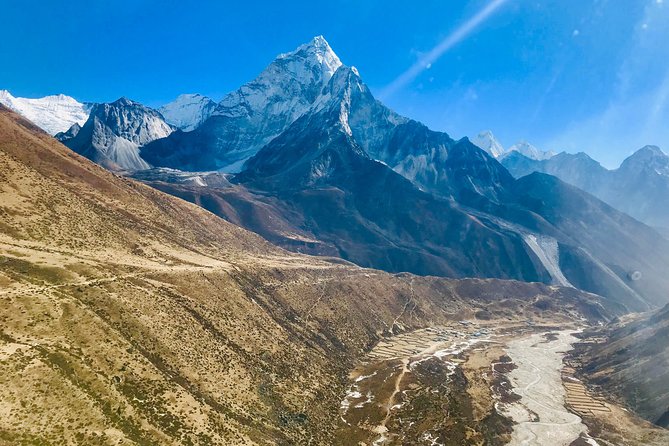
This is the portion that tends to stick in people’s memories: the time when the helicopter flies at Kalapatthar height for roughly 15 minutes to deliver the closest and best views. The goal is that window time when Everest terrain is sharp and readable—not just a vague idea of mountains.
A couple of practical things to understand:
- There’s no helicopter landing pad at Everest Base Camp in the way you might picture it. That’s why the plan emphasizes Kala Patthar as the nearest practical point.
- “15 minutes closest views” is short by design. It’s a tight window that depends on weather and safe flight conditions.
- You’re not getting time on the ground at Everest Base Camp. You’re getting a controlled, high-impact aerial moment with close window sightlines.
If you’re a photographer, this is the part where you’ll want to be ready—watching the approach, tracking the mountain shapes, and filming while the light and visibility cooperate. If you’re more of a “take it in with your eyes” person, you’ll still appreciate that this isn’t an endless flight with no payoff. It’s built around a concentrated view block.
When weather is good, it’s magic. When it’s not, you wait.
This tour requires good weather, and that’s the big governing factor behind everything. The itinerary includes weather-dependent choices, like shifting the breakfast location if conditions aren’t good at Hotel Everest View.
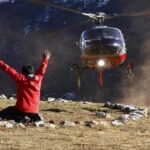
In real life, weather can also mean waiting for the helicopter to fly safely. Some experiences include delays tied to the return flight schedule, and you may end up spending extra time at or near the landing site while the helicopter is working its timing out.
So here’s my practical advice: plan your expectations around a day that can flex. This isn’t a “hop on and go no matter what” experience. It’s a weather-sensitive aviation plan with a payoff when the mountain cooperates.
If your main goal is Everest visuals and you can tolerate a bit of waiting, it’s worth it. If you hate schedule uncertainty and you’ve got no flexibility at all, consider whether a land-based trek might suit you better.
Price and what you actually get for $1,490 per person
At $1,490 per person, this is not a casual add-on. But it’s also not just “a ride”—it’s a whole helicopter day structure with transfers and timed stops designed around viewpoints.
Here’s what’s included:
- Hotel pickup and drop-off in Kathmandu
- The Experience brokerage fee (noted in the package)
- A 10% Live Entertainment Tax
- A mobile ticket
- Admission included for the Everest View Point stop (with Lukla marked as free for its brief refuel stop)
And here’s what’s not included (and can affect your real total):
- Food and drinks (you’ll need to plan for your own meals/snacks since it’s not part of the included cost)
- Airport tax (listed as 500 NRS, about $4)
- National park fees if applicable (listed as 28 USD)
- Khumbu Village development tax (listed as 2000 NRS)
- Everest Experience and Assistance fee (listed as $18 per person)
Value-wise, I think the strongest argument is that you’re paying to replace two weeks of hiking effort with a single day of high-altitude sightseeing. That’s expensive, sure. But the alternative is time, physical strain, and missed vacation days.
For you, the “value test” is this: if you’re short on time, have mobility limits, or just don’t want to spend days walking at altitude, this price can make sense. If you already have the time and fitness for a classic Base Camp trek, you’re paying for speed and convenience more than for unique access.
Also note: the helicopter tour has a maximum of 5 travelers. In a day-trip product at this price, small-group handling is a meaningful quality lever.
Who should book this Everest helicopter tour (and who should rethink it)
This tour fits best if you:
- Want Everest viewpoints without committing to a multi-day hike
- Prefer a short, structured day over days on trails
- Appreciate a small group (max 5) and more direct attention
- Are okay with weather-driven schedule shifts
You might rethink if:
- You’re on a tight schedule with zero tolerance for delays
- You expect a ground stop at Everest Base Camp itself
- You’re trying to keep costs ultra-low—because food, taxes, and park/development fees can add up
There’s also a stated weight limit of 265 lbs per passenger, so that’s a deciding factor if you’re near or above it.
And if you’re curious about whether you need special skills: the tour notes that most travelers can participate, but it doesn’t spell out detailed medical/physical requirements. If you have specific mobility or medical questions, it’s smart to confirm before you book.
Should you book Everest Base Camp by helicopter with Hotel Everest View landing?
I’d book it if your dream is Everest in a single day and you can handle weather uncertainty. The combination of Kathmandu hotel transfers, a real viewpoint breakfast at Hotel Everest View, and the closest practical “near Base Camp” experience at Kala Patthar height is a very direct path to the payoff.
I’d pass (or at least compare options) if you want a guaranteed, fixed schedule or you specifically need time on the ground at Everest Base Camp. This is a flight-first plan. When conditions are right, it’s a high-impact way to see Everest terrain without the trek. When conditions are not right, the day can stretch while you wait.
My final tip: treat this like an aviation experience with a sightseeing goal. Choose it for speed and viewpoint concentration, not for certainty.
FAQ
What time does the tour start?
The start time is listed as 6:15 am.
How long is the helicopter experience?
It’s approximately 5 hours.
Do they pick me up and drop me off in Kathmandu?
Yes. Hotel pickup and hotel drop-off are included, with the tour starting near public transportation.
Is there a helicopter landing at Everest Base Camp itself?
The plan is not described as landing directly at Everest Base Camp. The closest practical landing/views are centered on Kala Patthar because of landing limitations at Base Camp.
How long is the breakfast stop at Hotel Everest View?
The stop is around 30 minutes for breakfast, and it is described as optional if weather isn’t good at that viewpoint.
How long is the stop at Lukla?
The Lukla refuel stop is listed as about 20 minutes.
Where do you get the closest views for photos?
The itinerary describes flying to Kalapatthar height for about 15 minutes for the closest and best views, with opportunities to take photos and videos from the helicopter window.
Is the tour a small group?
Yes. The maximum group size is 5 travelers.
Are food and drinks included?
No. Food and drinks are not included.
What costs should I expect besides the tour price?
Not-included items listed include airport tax (500 NRS), possible national park fees (28 USD), Khumbu Village development tax (2000 NRS), and an Everest Experience and Assistance fee ($18 per person). Food and drinks are also not included.