REVIEW · TOKYO
【15 mins】TOKYO Sky: Private Helicopter Tour
Book on Viator →Operated by AIROS Skyview Tokyo Helicopter Tours (ヘリコプター遊覧飛行) · Bookable on Viator
Tokyo looks different from above. This private helicopter tour gives you quick, high-level views of Tokyo’s most famous landmarks, plus time to shoot photos and video.
I love that it’s small-group and private (up to 3 people), and I also love how the whole experience is built around a short, focused ride in the sky—15 minutes of flying, not a half-day production. One thing to consider: you’re paying premium prices for a brief airborne window, and there’s no hotel pickup or drop-off.
In This Review
- Key Takeaways Before You Go
- A Fast Helicopter Window Over Tokyo’s Most Famous Sights
- Tokyo Heliport and the Simple Logistics That Matter
- What the 1-Hour Experience Feels Like (Even With a 15-Minute Flight)
- Over Odaiba and Rainbow Bridge: Big Water, Bright Structure
- Tokyo Tower and Meiji Shrine: City Icon Meets Quiet Ground
- Shinjuku Gyoen and Rikugien: The Parks Look Like Patterns
- Ueno Zoological Gardens: A Different Kind of Landmark Shot
- Tokyo Skytree Close Up: Why This Flight Changes Your Photos
- Private Time, Professional Staff, and Photo Freedom
- Price and Value: Is $639.02 Per Person Worth It?
- Who Should Book This Tokyo Sky Helicopter Tour?
- Should You Book It?
- FAQ
- How long is the helicopter flight?
- Is this tour private?
- How many people can be booked together?
- Where do we meet for the tour?
- Do you include hotel pickup or drop-off?
- What’s included in the price?
- What landmarks will we see?
- Are there weight limits?
- What happens if the flight can’t operate due to weather?
Key Takeaways Before You Go
- Private, max 3 people means less waiting around and more room for your group’s pace.
- 15 minutes in the air is short on purpose, so plan this as a highlight, not a whole sightseeing day.
- Photo and video time is part of the fun, including major skyline icons like Tokyo Tower and Tokyo Skytree.
- English communication is reported as smooth, with staff that handle day-of issues quickly.
- Weather can change plans, but the tour offers a full refund or an alternative date if flying can’t happen.
A Fast Helicopter Window Over Tokyo’s Most Famous Sights
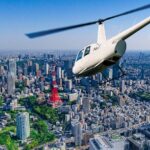
This is the kind of Tokyo experience that makes sense if you already know where you want to go on the ground. You’ll still experience the city, but from a totally different angle: straight down on waterways, parks, and districts, and out over iconic towers and bridges.
The flight is 15 minutes, and the tour is listed as about 1 hour total, which usually includes check-in, a safety orientation, and getting you settled before lift-off. You’ll see the big-name targets in the Tokyo skyline mix: Odaiba, Rainbow Bridge, Tokyo Tower, Meiji Shrine, Shinjuku Gyoen Park, Rikugien Park, Ueno Zoological Gardens, and Tokyo Skytree.
The best way to think about this tour is as “Tokyo in compressed form.” If you want hours of on-foot sightseeing, helicopter time isn’t the substitute. If you want a once-in-a-lifetime perspective shift, this hits that goal cleanly.
You can also read our reviews of more tours and experiences in Tokyo.
Tokyo Heliport and the Simple Logistics That Matter
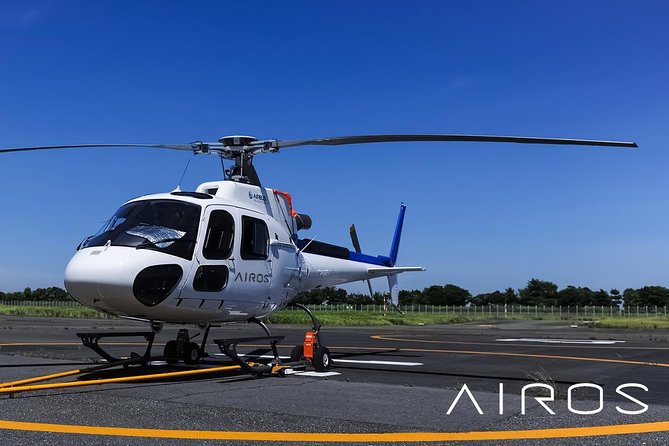
The meeting point is Tokyo Heliport, 4-chōme-7-25 Shinkiba, Koto City, Tokyo 136-0082. The tour notes that it’s near public transportation, but it also clearly does not include hotel pickup or drop-off.
That matters more than you’d think. Tokyo is big, and “easy” transport can still eat time if you’re starting far from Shinkiba. If you’re building this into your schedule, I’d treat it like a destination you go to directly, not like an add-on that fits anywhere.
A practical tip: plan to arrive early enough to handle getting oriented, paperwork, and any last-minute adjustments. If you’re bringing a group (up to 3), I’d keep everyone together for check-in so you don’t lose time hunting each other in a busy area.
What the 1-Hour Experience Feels Like (Even With a 15-Minute Flight)
Your time onboard is 15 minutes of helicopter flying. Before that, there’s a safety orientation, plus staff time to get everyone briefed and seated. After the flight, you return to the meeting point.
The short duration is a feature, not a flaw. For many people, the biggest question is motion and comfort—especially if you’ve never been in a helicopter. One of the strongest takeaways from the experience is that the flight can feel stable, and that helps a lot if you worry about motion sickness. Still, if you’re sensitive to motion, this is one of those times where you’ll feel better if you plan for it calmly: hydration, a light meal, and not stacking it right after a long commute.
Also, remember you’re taking in photos while airborne. In a short flight, you don’t get endless second chances. If photography is your priority, you’ll want to be ready to shoot when you’re near the targets—think “when the skyline comes into view,” not “after I figure out my settings.”
Over Odaiba and Rainbow Bridge: Big Water, Bright Structure
This is often where the helicopter wow-factor kicks in fastest. Odaiba and Rainbow Bridge stand out from the air because they’re made for wide-angle views: modern waterfront geometry, clean lines over water, and dramatic connections between neighborhoods.
From above, bridges don’t look like a single crossing—they look like design landmarks. Rainbow Bridge is especially photogenic because you can frame it with the surrounding waterfront and Tokyo’s skyline depth. You’ll also get the kind of perspective you can’t fully recreate from street level, where buildings block sightlines and angles.
One drawback to keep in mind: during a short 15-minute flight, you might not get the same “lingering” feeling you’d get on a longer aerial tour. The best strategy is to aim for a photo set that covers the bridge plus a second shot that shows the surrounding area as context, so you’re not relying on one single perfect frame.
Tokyo Tower and Meiji Shrine: City Icon Meets Quiet Ground
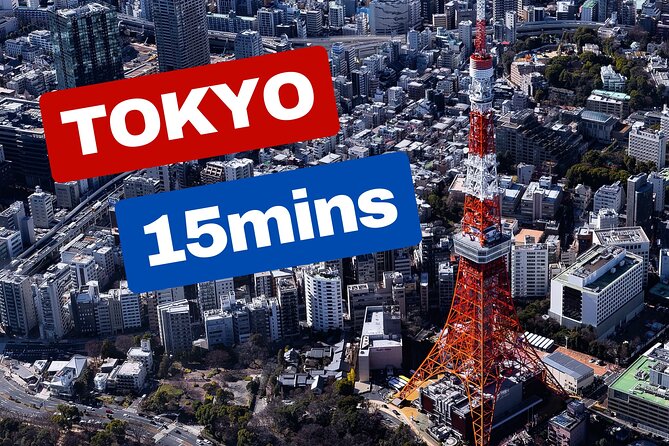
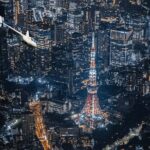
Tokyo Tower brings a different energy. At ground level, it’s impressive, but it can still feel like a single object in a crowd. From above, Tokyo Tower often reads like a point in a map—a strong marker you can spot quickly, then photograph with the city’s shape around it.
Meiji Shrine adds a contrasting element that you won’t get from the busy skyline shots. Aerial views make parkland and green corridors feel more organized, like a pattern inside the city. Even if you’re not landing or walking the shrine grounds, you’ll understand the placement of the area in relation to Tokyo’s dense neighborhoods.
If you’re trying to balance “famous buildings” with “Tokyo’s softer spaces,” this segment tends to do it well. It also gives you variety in your photo collection: bright tower silhouette plus calmer greenery and a sense of how the city layers its spaces.
Shinjuku Gyoen and Rikugien: The Parks Look Like Patterns
When you fly over Shinjuku Gyoen Park and Rikugien Park, you’re seeing parks the way the city planners probably intended them: as big open shapes that act like breathing rooms.
From above, park textures matter. Paths look like lines, water features (if visible from your angle) show up as breaks in the greenery, and tree density gives visual weight to the landscape. This is a big part of why a helicopter flight can feel more educational than you’d expect—you learn the “layout logic” of a city without walking every street.
The possible downside is that park views can be more subtle than towers and bridges. If you’re expecting constant neon-level spectacle the entire time, parks might feel quieter in your photos. I’d treat them like the scenic palate cleanser: a chance to capture Tokyo as more than just steel and signage.
Ueno Zoological Gardens: A Different Kind of Landmark Shot
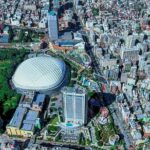
Ueno Zoological Gardens is a unique one to see from the air because zoo land reads differently than a normal city park. The aerial perspective can help you understand how it fits into the broader Ueno area.
While you probably won’t be photographing specific enclosures in detail, you’ll get the big-picture composition—how the zoo area sits relative to nearby streets and green spaces. That makes it useful if you’re doing “Tokyo by neighborhood” sightseeing later. You’ll have a mental map already made.
As with parks, the value here depends on your eye for structure. If you like wide context shots—areas and borders—this one can be a great addition. If you only want the biggest single icons, it may be more of a “supporting character” in your aerial photo set.
Tokyo Skytree Close Up: Why This Flight Changes Your Photos
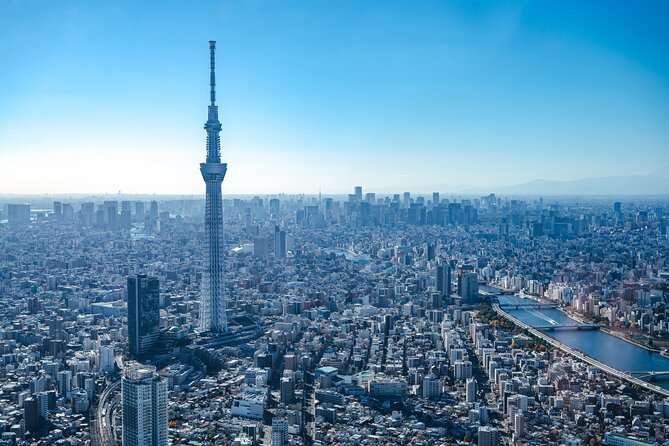
Tokyo Skytree is the payoff for a lot of people, and it’s easy to see why. When you approach a major vertical landmark from above, you can capture it with the city’s layout feeding into the frame. That sense of scale is hard to reproduce on the ground because you can’t always step back far enough to see the whole skyline relationship.
This is also where acceleration and perspective become part of the experience. One of the standout points from the experience is that guests felt the flight helped them understand things you can’t fully grasp without that aerial viewpoint—like how the city drops away under you and how the skyline shifts as you move.
If you’re planning your photo strategy, Skytree is your “get the money shot” target. Try to prepare your camera or phone settings before takeoff so you can focus on timing, not menu hunting.
If you care about lighting, consider asking what flight times are available. One comment specifically points toward booking a night view next time, and that’s a smart instinct for anyone chasing Tokyo’s light patterns.
Private Time, Professional Staff, and Photo Freedom
This tour is designed as private for your group, with a maximum of 3 people per booking. That tends to make everything smoother: fewer strangers changing the rhythm, and less waiting around while your group gets ready.
The staff experience also matters here. Communication in English is described as smooth, and staff are reported as professional and friendly. When things go sideways—like confusion about which helicopter airport to use—staff reportedly respond quickly and help sort it out fast.
That’s reassuring, because helicopter tours can be unforgiving if you’re late or in the wrong spot. The practical lesson is: double-check the exact meeting location and any instructions you’re sent, then build time into your schedule so you’re not sprinting.
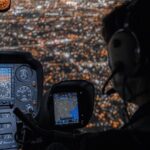
On the fun side, the flight is built for capturing images. One of the strongest praises is that passengers had freely taken photos and videos, and the experience felt stable enough that at least some people who were worried about motion sickness still got to enjoy it.
Price and Value: Is $639.02 Per Person Worth It?
At $639.02 per person, this isn’t an impulse purchase. You’re paying for three things at once: the aircraft, the pilot time, and the private, small-group access to a view you can’t really replicate any other way.
The value question depends on your priorities:
- If you want the “Tokyo from above” moment, and you’re okay spending premium money for a short but intense ride, the pricing can feel reasonable relative to what aerial access usually costs.
- If you’re more of a slow-travel, walking-and-learning person, a 15-minute flight may feel like a lot of money for a quick taste.
Where this can become better value is with group size. Since it’s private and capped at 3 people, it’s priced per person, not per helicopter. If your budget allows and you’re traveling as a pair or trio, you can share the experience while keeping the flight intimate.
Also, the included parts matter: helicopter tour (15 minutes), safety orientation, and gratuities are included. What’s not included is food and drinks, so plan for a normal meal before or after without expecting the tour to handle it.
Who Should Book This Tokyo Sky Helicopter Tour?
This works best for you if:
- You want Tokyo’s landmarks with a true aerial perspective, especially iconic ones like Tokyo Tower and Tokyo Skytree.
- You prefer a small-group private experience instead of a crowded tour.
- You care about photography and want the chance to shoot photos and video from the air.
- You’re short on time and want a high-impact experience without planning a full day.
It might not be your best fit if:
- You need hotel pickup and drop-off for convenience and don’t want to handle logistics.
- You dislike premium pricing for short time windows.
- You’re traveling with someone who has constraints listed by the operator—like anyone who went diving within the past 24 hours, since that’s not allowed for participation.
- You’re not comfortable with weather uncertainty, even though the tour offers a full refund or alternative date if flying can’t happen.
Should You Book It?
If your dream Tokyo trip includes at least one “wow, that’s Tokyo” moment, this is a strong contender. I’d book it if you can handle going to Tokyo Heliport on your own, you’re excited about skyline photography, and you’re okay paying for a short, focused flight.
I’d skip it if your ideal day is long, leisurely, and walking-heavy, or if your schedule is tight enough that weather cancellations would wreck your plan. But if you want compressed Tokyo at the height it deserves, the private 15-minute helicopter experience is one of the most direct ways to get it.
FAQ
How long is the helicopter flight?
The helicopter tour includes 15 minutes of flight time. The overall activity duration is listed as about 1 hour.
Is this tour private?
Yes. It’s a private tour/activity, and only your group participates.
How many people can be booked together?
The maximum is 3 people per booking.
Where do we meet for the tour?
The meeting point is Tokyo Heliport, 4-chōme-7-25 Shinkiba, Koto City, Tokyo 136-0082, Japan.
Do you include hotel pickup or drop-off?
No. Hotel pickup and drop-off are not included.
What’s included in the price?
Included: helicopter tour (15 minutes), safety orientation, and gratuities.
What landmarks will we see?
The experience highlights include views of Odaiba, Rainbow Bridge, Tokyo Tower, Meiji Shrine, Shinjuku Gyoen Park, Rikugien Park, Ueno Zoological Gardens, and Tokyo Skytree.
Are there weight limits?
Yes. The tour lists a comfort and weight/balance aircraft limitation of 286 lbs (130 kg) per passenger. It also lists total weight per passenger as 265 lbs.
What happens if the flight can’t operate due to weather?
If the tour can’t be conducted due to weather or other flight-operation issues, you receive a full refund or an alternative date.