REVIEW · TOKYO
【TOKYO→FUJI】 Helicopter Oneway Transfer 35mins
Book on Viator →Operated by AIROS Skyview Tokyo Helicopter Tours (ヘリコプター遊覧飛行) · Bookable on Viator
A helicopter ride over Mount Fuji is the shortcut you feel in your bones. I like that this is a true one-way air transfer with a listed 35-minute flight time, so you gain time versus long surface routes. I also like the simplicity of it: you board from Tokyo Heliport and land at Fuji-Oshino Heliport, then get about a half-hour on the ground at Glamp Dome Fuji Oshino.
The main drawback to plan for is that this is still a one-way drop-off. Once you land out by the mountain, you’ll need your own plan to get back, and transport can get expensive fast.
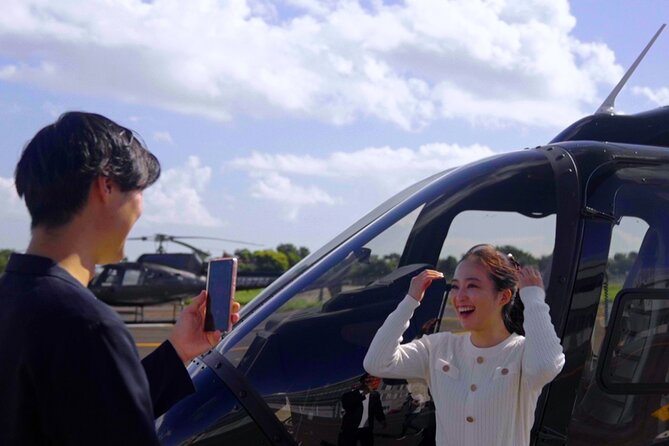
One more thing: Tokyo Heliport has strict rules for photography on-site, so if you’re thinking of memorial photos in front of the helicopter, you’ll want to read the details carefully before you go.
In This Review
- Key things to know before you book
- A 35-minute jump from Tokyo to the Fuji area
- Tokyo Heliport check-in: fast, close, and photo-restricted
- Boarding for a one-way shuttle: simple ticket, strict rhythm
- In the air: what the 35 minutes really buys you
- Landing at Fuji-Oshino Heliport and the Glamp Dome stop
- Price and value: $2,794.39 per person, and what you’re paying for
- Weather rules: why your “best plan” still needs Plan B
- Comfort, baggage, and body limits you should not ignore
- Who this one-way Tokyo → Fuji helicopter transfer fits best
- Final call: should you book this Tokyo → Fuji helicopter shuttle?
- FAQ
- What is the flight time for the Tokyo to Fuji one-way transfer?
- Where do I depart from and where do I arrive?
- How long is the stop after landing near Fuji?
- What departure times are available?
- Is this a private activity?
- What baggage is included?
- What is the cancellation policy if weather is bad?
- Is there a weight limit?
- Are photos allowed at the departure heliport?
Key things to know before you book
- 35 minutes in the air means more time in the Fuji area and less time stuck in traffic.
- Private tour/activity setup: it’s only your group, not a shared crowd experience.
- Photo restrictions at Tokyo Heliport can affect your ability to take pictures before boarding.
- Weight limits are real: you have a passenger cap and tight balance requirements.
- Carry-on is limited to one piece free of charge, with extra baggage treated as extra work.
- Weather-dependent flights: poor conditions can trigger cancellation and you’ll need a flexible mindset.
A 35-minute jump from Tokyo to the Fuji area
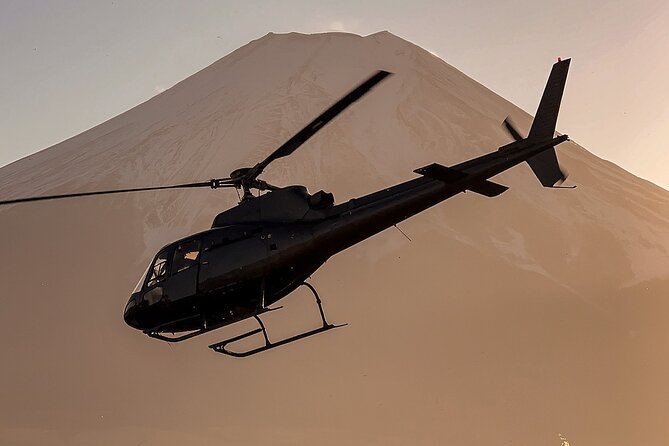
This transfer is built around speed. The flight time is listed at 35 minutes one way, and the overall experience runs about 1 hour 30 minutes. That matters because Fuji day trips often fail on timing—roads slow, daylight shrinks, and weather can shift. Here, you’re choosing a schedule that centers on the short window you’re paying for.
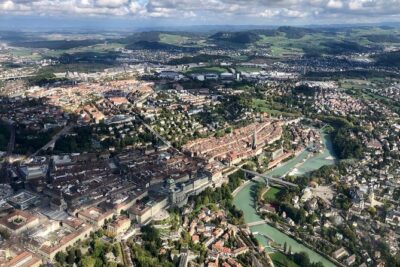
The real payoff is the view. From above, Mount Fuji doesn’t look like a distant postcard—it looks like a physical presence. You’ll see the coastline/urban spread easing out, then the volcanic mass rising with changing cloud and shadow patterns below. Even when visibility isn’t perfect, the aerial perspective tends to be more dramatic than you’d expect from ground vantage points.
You can also read our reviews of more tours and experiences in Tokyo.
Tokyo Heliport check-in: fast, close, and photo-restricted
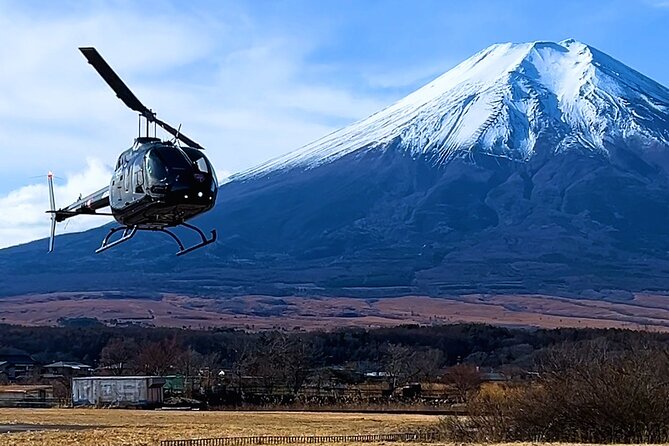
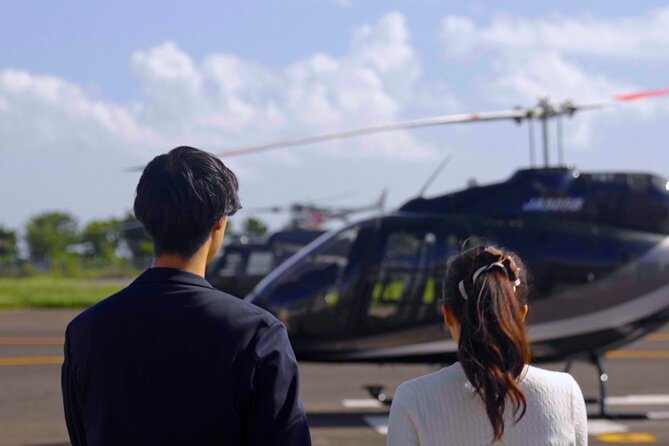
You meet at Tokyo Heliport at Shinkiba (Koto City). The plan gives you 30 minutes there before departure, which is enough time to get through boarding procedures without feeling rushed. You’ll use a mobile ticket, and the area is described as near public transportation, so you’re not locked into a taxi just to arrive.
Now the part that surprises many people: photography and picture-taking are banned at the site as part of Tokyo’s terrorism countermeasure. That means no casual pre-flight photo session in front of the helicopter. If getting a memorial shot matters to you, the provided guidance suggests considering Funabashi Heliport and the night course from Yokohama Nishi Heliport instead. The good news: taking photos during the helicopter experience is allowed—shooting from inside the aircraft and during flight is permitted.
Boarding for a one-way shuttle: simple ticket, strict rhythm
This is a boarding ticket for a helicopter shuttle service (one way). That wording is important. You’re not booking a round-trip sightseeing package that returns you to Tokyo. You’re buying one leg of the journey, with a set schedule of departure times.
Departure times are listed hourly from 9:00 through 15:00, and confirmation is received within 48 hours of booking subject to availability. With a one-way service, that confirmation timing matters because it affects when you can lock down your plans on the Fuji side. If you like having every part of your day arranged down to the hour, plan your ground transportation and reservations with extra room to adjust.
Also, your group experience is private. That doesn’t change the flight itself, but it often changes the mood on the day—less waiting around, fewer mixed schedules, and a calmer setup before you head for the aircraft.
In the air: what the 35 minutes really buys you
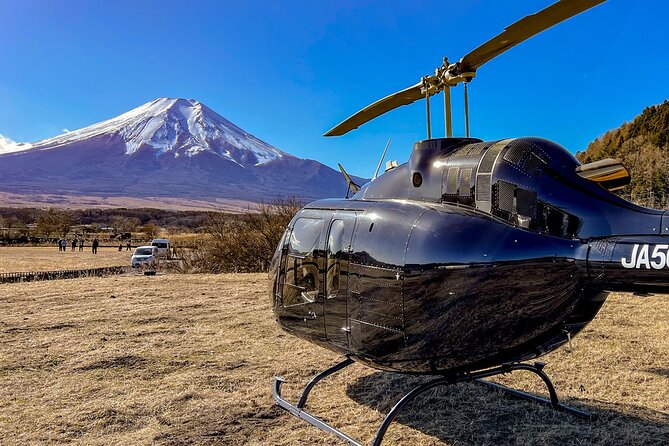
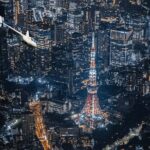
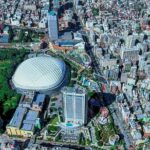
The highlight is the aerial portion: 35 minutes of flight time plus the thrill of looking down at Japan shrinking into patterns. Mount Fuji is the obvious draw, but the non-obvious draw is how the region looks from above. Rivers, roads, and built-up areas appear as geometry. Then the terrain shifts and Fuji becomes the organizing feature of everything around it.
You should also know that comfort and aircraft balance are part of the deal. The info lists:
- Total weight per passenger: 265 lbs
- A stated weight limitation of 286 lbs (130 kg) per passenger due to comfort and balance
- Maximum total weight limit: 530 lbs (240 kg)
So even if your personal weight is under the cap, they still have a total weight balance constraint. That can influence whether the flight is operated safely within limits, especially with groups on board.
On baggage: each passenger gets one piece of carry-on baggage free of charge. Anything beyond that is handled with extra fees for delivery or by sending items in advance. That’s your nudge to travel light.
Landing at Fuji-Oshino Heliport and the Glamp Dome stop
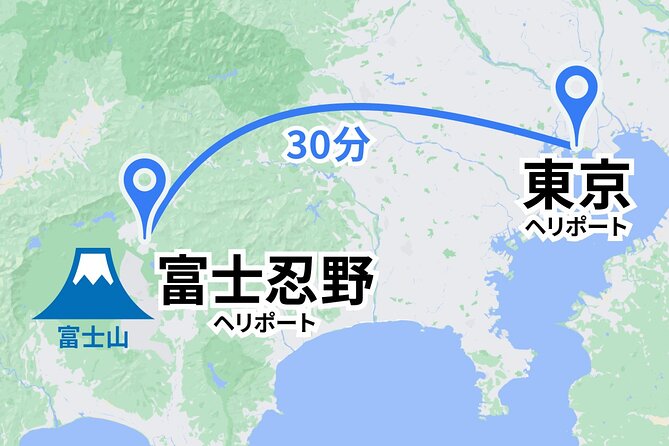
You arrive at Fuji-Oshino Heliport, which is the key to why this transfer works for time-strapped days. Instead of spending your morning getting out of Tokyo and wrestling with surface routes, you’re dropping near the Fuji-Oshino area.
After landing, there’s a 30-minute stop at Glamp Dome Fuji Oshino. The admission ticket is listed as free, so you’re not paying an extra entry fee for that ground portion. This window is short, so treat it like a stretch break and a quick taste of the area rather than a full sightseeing day.
Here’s the practical side: landing is out by the mountain. The service then expects you to handle your next move. If you were imagining an effortless hop into a convenient return transport option, adjust that thinking early. One clear caution from real-world experience is that the return can be slow and pricey—someone reported a 2.5-hour cab ride for about $400 USD after being left to find their own way back.
What does that mean for you? It means you should plan your next step before you book. Ideally, you’d have a pre-arranged taxi plan, a booked transfer, or a plan that keeps you in the region after landing so you’re not scrambling at the end of a flight.
Price and value: $2,794.39 per person, and what you’re paying for
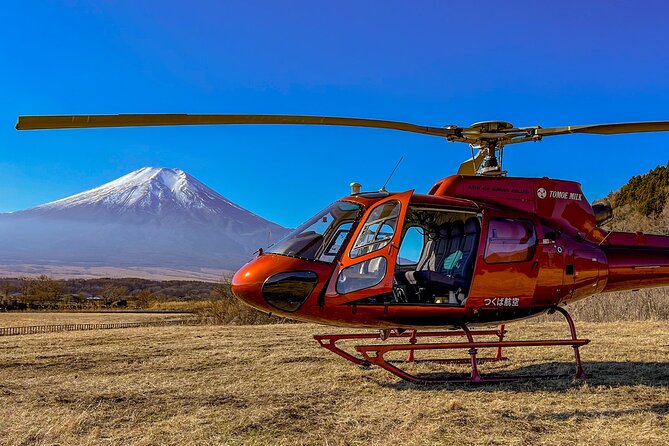
This is expensive. The price is listed at $2,794.39 per person, and it’s hard to sugarcoat that. The only way it makes sense is if you’re paying for something that’s hard to replace: time and aerial access to Mount Fuji.
Think about what you’re buying:
- You’re paying to compress a long surface journey into a 35-minute flight
- You’re paying for a view experience that doesn’t rely on crowded lookouts or weather luck from ground-level angles
- You’re paying for a private-group transfer feel, with a defined schedule and boarding process
But the one-way structure tilts the value equation. If you can’t solve the return logistics cheaply, the overall trip cost can balloon. Helicopters aren’t just a “wow” purchase; they also change your transportation math. If you’re on a tight budget, this is likely the wrong tool.
If you’re flexible and this is part of a once-in-a-while plan—especially if you want Fuji overhead rather than from the roadside—then the value starts to look different. You’re essentially paying to convert money into time and clarity.
Weather rules: why your “best plan” still needs Plan B
This experience requires good weather. The info states that if the tour can’t be conducted due to adverse weather, specific aircraft equipment issues, or other disturbances affecting operations, you’ll receive a full refund or an alternative date.
That sounds reassuring. What it doesn’t remove is the uncertainty. With scheduled departures from 9:00 to 15:00, you have some flexibility within the day, but Fuji weather decisions can be sudden. The provided guidance specifically points you to check Japan Meteorological Agency forecasts (weekly forecast link is included). If your travel plans are fixed—like you must be somewhere by a certain time—then you’ll want to build in backup time or travel options.
Comfort, baggage, and body limits you should not ignore
Even if you’re fit and healthy, the limits are part of the safety math for helicopter balance. The stated per-passenger weight restriction is 286 lbs (130 kg), and there’s a stated total weight cap for the aircraft. That’s not just a legal checkbox—helicopters are sensitive to weight and distribution.
Baggage is also controlled:
- One carry-on piece free
- Extra baggage requires delivery fees or advance sending
If you’re the type who brings three outfits plus a suitcase of extras, shift your strategy. Bring what you can carry, and plan what you’ll wear based on the weather conditions you see in Japan once you land.
One more hard rule: passengers who have gone diving in the past 24 hours cannot participate. That’s a safety requirement, not a preference, so if that applies to you, you’ll need to adjust your timing.
Who this one-way Tokyo → Fuji helicopter transfer fits best
I’d point this toward people who meet at least one of these conditions:
- You value speed and want to spend more time in the Fuji area than traveling to it.
- You want Mount Fuji from above and accept that the view depends on weather.
- You’re planning a special trip and want a short, memorable segment that feels different from buses and trains.
- Your schedule can handle rescheduling if weather cancels the flight.
It’s a weaker fit if:
- You need an easy, low-cost return from the landing area without advance planning.
- Your budget can’t absorb a high-per-person cost plus potential ground transport expenses after drop-off.
- You’re very photo-focused at the departure site, since Tokyo Heliport prohibits photography on-site.
Final call: should you book this Tokyo → Fuji helicopter shuttle?
Book it if you’re chasing time savings and a 35-minute aerial view experience more than a budget win. Also book it if you can solve the one-way return problem in advance—so you’re not stuck improvising after landing.
Skip it or think hard first if your plan assumes convenient return transport at a low cost. The one-way nature is the big trade. You gain speed, then you own the next step.
If you’re ready for that trade—plus the weather risk and strict weight/baggage rules—this helicopter transfer can feel like a clean, direct way to reach Fuji. If you want a simple round-trip, you’ll likely feel the friction.
FAQ
What is the flight time for the Tokyo to Fuji one-way transfer?
The flight time is listed as 35 minutes (one way), with an overall experience duration of about 1 hour 30 minutes.
Where do I depart from and where do I arrive?
You depart from Tokyo Heliport and arrive at Fuji-Oshino Heliport.
How long is the stop after landing near Fuji?
After landing, there’s a 30-minute stop at Glamp Dome Fuji Oshino.
What departure times are available?
Departure times are listed as 9:00, 10:00, 11:00, 12:00, 13:00, 14:00, and 15:00.
Is this a private activity?
Yes. It’s listed as a private tour/activity, so only your group participates.
What baggage is included?
Each passenger is allowed one piece of carry-on baggage free of charge. Additional baggage may require delivery fees or advance sending.
What is the cancellation policy if weather is bad?
If the experience can’t be conducted due to adverse weather or other operational issues, you’ll receive a full refund or an alternative date. You can also cancel up to 24 hours in advance for a full refund.
Is there a weight limit?
Yes. The information lists comfort and balance limits, including 286 lbs (130 kg) per passenger. It also provides a maximum total weight limit for the aircraft.
Are photos allowed at the departure heliport?
Photography and picture-taking are banned at Tokyo Heliport. The information notes that you can take photos during the helicopter experience and flight.