REVIEW · MOUNT COOK
Mount Cook Alpine Explorer Helicopter Flight with Alpine Landing
Book on Viator →Operated by Totally Tourism - The Helicopter Line · Bookable on Viator
Snow landing days are special. This 35-minute Aoraki Mt Cook helicopter flight gets you above the Ben Ohau Range and the Southern Alps, with pilot narration that makes the terrain make sense. I really like the up-close access you get in a small twin-engine helicopter (max 6 people), and I’ve heard pilots like Greg and Dan bring the area to life with clear, practical history while you’re up there.
The big thing to know is that the snow landing is weather and conditions dependent. On the right day you step out onto a snowfield; on a day when snow landing isn’t possible, you may still enjoy the scenic flight without that big walk-and-play moment.
In This Review
- Key highlights worth planning around
- Entering Mt Cook’s alpine sky: what makes this helicopter flight worth it
- Glentanner Park check-in: getting ready for takeoff
- The flight route: Ben Ohau Range and the Southern Alps from above
- The snow landing moment: what it feels like when conditions allow
- Aoraki/Mount Cook from the air: seeing why it’s called a cloud piercer
- Tasman Valley and Lake Pukaki views on the return leg
- What you’re really buying for $359.62 per person
- Tips so you enjoy every minute (even on a no-snow day)
- Who should book this helicopter flight with alpine landing?
- Should you book the Mount Cook Alpine Explorer with snow landing?
- FAQ
- How long is the total trip?
- How much of that time is flight versus the snow landing?
- Where do I meet for the helicopter flight?
- Is the snow landing guaranteed?
- What will the pilot do during the flight?
- How many people are on this flight?
- Is there a weight limit?
- What should I wear?
- What if flights are canceled due to weather?
- Can I cancel and get a full refund?
Key highlights worth planning around
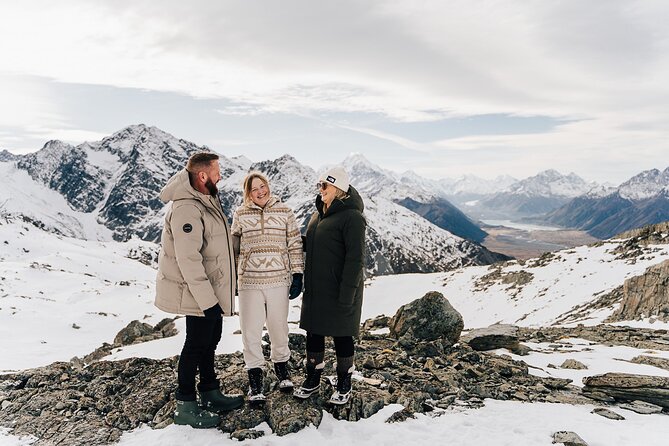
- Snowfield walk-and-play if conditions allow, right in the high alpine area
- Pilot commentary that points out features as you fly (including spots tied to Māori stories)
- Small group size: up to 6 passengers means less crowding and more attention
- Prime viewpoints of Aoraki/Mt Cook and the surrounding peaks from above
- Tasman Valley return views toward Lake Pukaki on the way back
- An up-close “ridgelines and passes” route that you simply can’t reach by car
Entering Mt Cook’s alpine sky: what makes this helicopter flight worth it
This isn’t just a quick sightseeing hop. It’s a fast way to trade roads and viewing platforms for something much more direct: flight paths over steep ridgelines and high passes in the Southern Alps. When you’re up there, Aoraki/Mount Cook stops being a faraway summit on a map and turns into a real, physical presence—towering, textured, and surrounded by glacially carved terrain.
The other reason I’m a fan is the human layer. You’re not just looking out a window. You get pilot narration, and that narration matters because it gives you names and context for what you’re seeing. On some flights, pilots like Greg have shared history and pointed out what to watch for. On others, pilots like Dan have done the same thing with a calm, practical style—helping you turn a bunch of peaks into an actual mental picture.
The value part is the combination: short time up in the air, big views, and a small group. For $359.62 per person, you’re paying for access. You’re not paying for a long day. You’re paying to go somewhere the road simply can’t take you.
You can also read our reviews of more tours and experiences in Mount Cook.
Glentanner Park check-in: getting ready for takeoff
You meet at The Helicopter Line, Mount Cook Glentanner Park, on State Highway 80 (Glentanner 7999). The trip ends back at the same meeting point, so you’re not hunting for transport afterward.
From a planning standpoint, I treat helicopter flights like “weather appointments,” not “time-slot promises.” The region is alpine and changeable, and operations depend on what the skies are doing on your day. That means it’s smart to build a little slack into your Mount Cook schedule rather than stacking tight connections.
Wear warm layers. Even when the air looks calm from the ground, conditions near high peaks can feel colder once you’re moving and exposed. The tour recommends warm clothing and suitable footwear, and I strongly agree. You’ll be sitting for parts of the flight, then stepping out if the snow landing happens—so you want warm legs, good grip on cold surfaces, and enough layers to adjust when you return inside the helicopter.
Finally, know the capacity and weight limits in advance. This is a small aircraft (twin-engine, seating for up to six passengers). There’s also a stated weight limit of 276 lbs per passenger. If you’re near that number, it’s worth checking before you go so you don’t get a surprise at the last moment.
The flight route: Ben Ohau Range and the Southern Alps from above
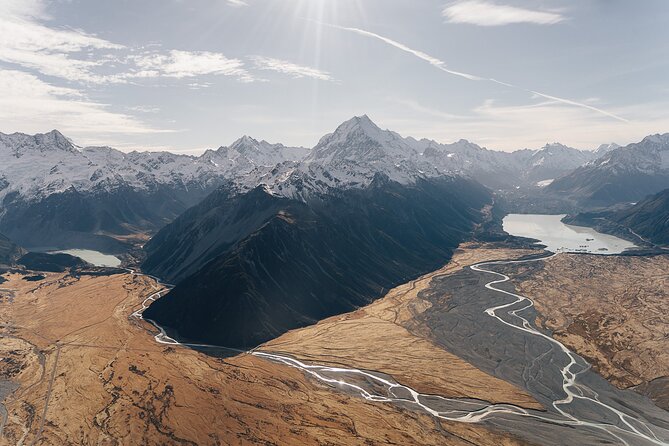
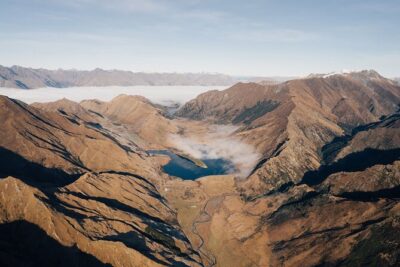
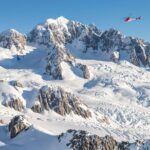
Once you lift off, expect a scenic route above steep terrain. You’ll soar over ridges and head toward a mountain pass area through the Southern Alps. From up high, those ridgelines look like they’ve been “cut” and layered—exactly what you want to see if you’re curious about how glaciers shaped this country.
Aoraki/Mount Cook National Park (Te Wahipounamu) sits at the heart of the experience, and you get views that go beyond a single peak. This flight route includes the Ben Ohau Mountain Range, which is a real highlight because it shows you how the peaks sit together and how valleys open and narrow beneath them.
Pilot narration can help you “read” the terrain. You’ll hear what to focus on while you’re in the air—names, features, and why certain parts of the mountains look the way they do. One of my favorite parts of helicopter flights is that you can visually track how the land changes as you move, not just what you see when you stop.
The snow landing moment: what it feels like when conditions allow
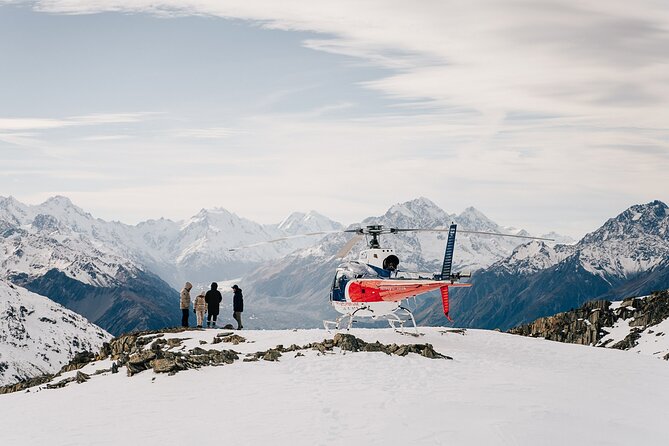
This is the headline: an alpine snow landing with a short walk-and-play break. The tour describes the landing as snowfield time, weather dependent and tied to the season. If conditions line up, you’ll step out and experience that rare feeling of being in a snowy high place in a way no hike or road viewpoint can mimic.
Think of it like the best part of a mountain day, but compressed. You get big views from above, then you get a small taste of being inside the snow environment itself. The tour also builds in time for you to enjoy the moment before returning for more aerial views.
Here’s the practical caution: the snow landing is not guaranteed. If the weather or snow conditions aren’t favourable, you might fly the scenic route without stepping out. That’s why I always advise people to treat the snow landing as the “bonus,” not the “only reason.” If you can enjoy the flight even without the landing, you’ll feel happier on the day.
If you do land, warm layers are even more important than you think. You’re going from cabin air to wind and cold air at altitude. Wear footwear that won’t slip, and bring a hat or warm layer for your head if you run cold easily. Bright conditions are common around snow, so sunglasses are a great idea.
Aoraki/Mount Cook from the air: seeing why it’s called a cloud piercer
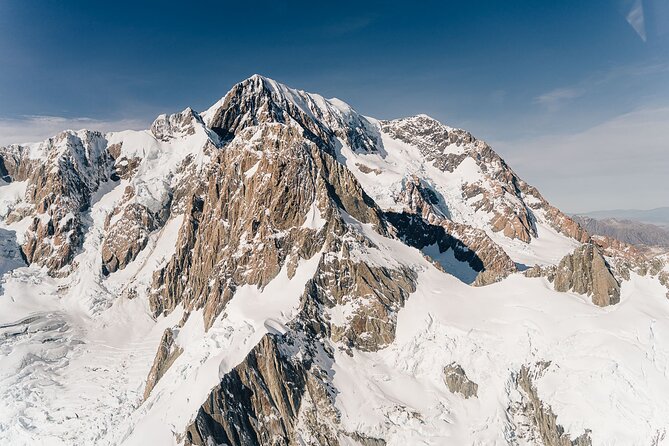
Aoraki/Mount Cook is known as the cloud piercer, a title tied to Māori naming and the mountain’s dramatic ability to rise through weather. Up in the helicopter, that story makes more sense because you see the mountain as a vertical force—towering over nearby country while clouds and light shift around it.
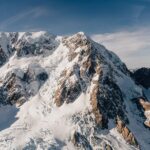
You’ll get a view of New Zealand’s highest mountain from above: Aoraki/Mount Cook rises to 12,217 feet (3,724 meters). From ground viewpoints, you often see it partially framed by trees, distance, or changing weather. From the air, the shape is clearer and the sense of scale is stronger. It feels less like looking at a photo and more like inspecting a real object.
The flight also gives you a feeling for how the valleys and rivers run below. You’ll be able to see vast valleys, towering peaks, and the routes water takes as it travels down through the terrain. If you’re the type who loves maps, this part rewards you: you’ll get a mental picture of where things sit relative to each other.
Tasman Valley and Lake Pukaki views on the return leg
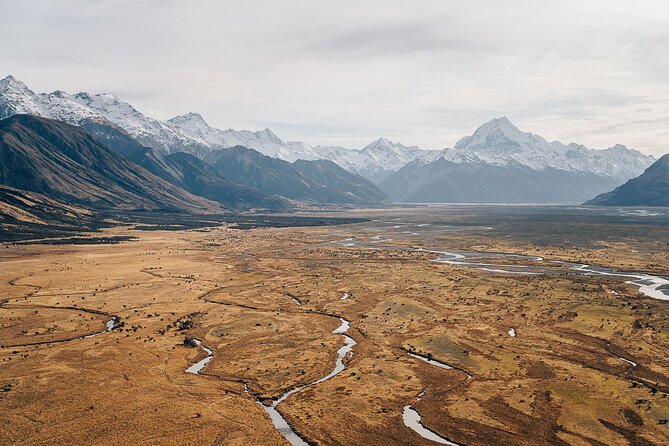
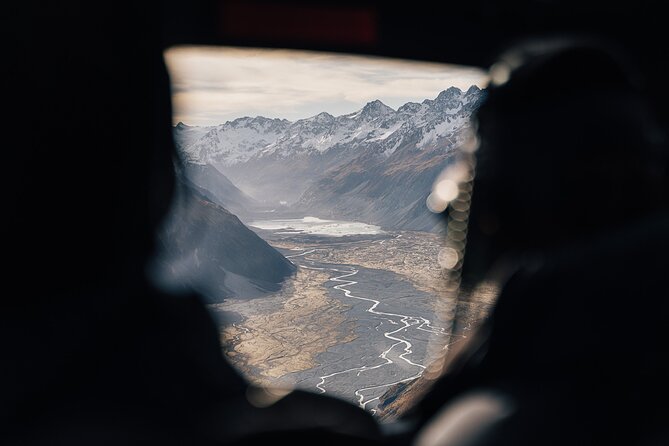
The return flight matters. You don’t just “go up and come back.” On the way back to Glentanner Park, you’ll look down the Tasman Valley toward Lake Pukaki.
This is where the flight gives you depth. High peaks are impressive, but valleys explain the story—how glacier-fed water carves paths, where the land opens up, and how the shape of the valley funnels views toward a major lake.
If you’re someone who likes photography, this is also a good time to be ready. Light can change quickly in the Southern Alps, and you’ll want your phone or camera accessible (securely) for the return views. The helicopter ride itself is short, so having your gear accessible helps.
What you’re really buying for $359.62 per person
Price is always the hard part with helicopters. At $359.62 per person, you’re paying a premium over a car day around Mount Cook. But the trade is access, time, and viewpoint quality.
Here’s how I look at it: a normal day can show you impressive mountains, but it usually depends on roads, hiking, and weather windows. A helicopter compresses all of that into about 35 minutes total (with stated flight time around 20–25 minutes, plus roughly 10 minutes allocated to the alpine landing when it happens).
Also, this tour is capped at max 6 travelers. That means you’re not squeezed into a large group, and you’re less likely to feel like you’re fighting for sightlines. Even with small aircraft, the experience can feel more personal when the group stays small.
Value also comes from the narration. The pilot guide & commentary is included, and for many people that’s what turns “pretty views” into “I understand what I’m seeing.” If you love learning as you travel, that’s part of the value you’re paying for.
One more practical note from the way these flights operate: some days may require a minimum number of travelers to operate. If your date is marginal for numbers, you may be rebooked or shifted. That’s not unusual in a small-operator setting, but it’s worth understanding so you don’t plan your day as if everything is guaranteed.
Tips so you enjoy every minute (even on a no-snow day)
1) Dress for cold and wind, not for the time you check the weather. The tour specifically recommends warm clothing and suitable footwear.
2) Bring sunglasses. Snow glare is real, and you’ll be looking outside for most of the experience.
3) Keep your expectations flexible about the snow landing. If it’s not possible, you’ll still get the aerial route and pilot narration.
4) Be ready for route changes with conditions. The region can be foggy or windy, and operations may adjust to better flying conditions.
5) Use the pilot’s eyes. This is one of those experiences where asking a question or listening for what they point out can seriously upgrade what you notice afterward.
If your pilot is Greg or Dan, you may also get extra help with photos. One flight described the pilot taking pictures during the landing and making them available as a card you can purchase after the flight. Don’t count on it as a guarantee for every departure, but it’s an example of how the experience can be more than just the view.
Who should book this helicopter flight with alpine landing?
This is a strong fit if you want:
- Big alpine views without hiking
- A chance to step out onto a snowfield if conditions allow
- A short, memorable outing in the Mount Cook area rather than an all-day trek
It’s also a good option if you’re traveling with limited time. About 35 minutes is easy to slot into an itinerary, especially if you’re already staying near Mount Cook village.
It may be less ideal if:
- You are very dependent on the snow landing happening no matter what (because it’s explicitly weather and season dependent)
- You prefer to save money for land-based viewpoints and hikes
Families should note the child rule: children must be accompanied by an adult, and children under 15 kg are required to sit on a parent’s lap. If you’re traveling with young kids, it’s worth considering comfort and the short duration versus how cold it can feel outside the helicopter.
Should you book the Mount Cook Alpine Explorer with snow landing?
I’d book it if you want a short trip that gives you a high-altitude, helicopter-only perspective of Aoraki/Mount Cook, the Ben Ohau Range, and the Tasman Valley. The value isn’t in a long itinerary. The value is in access—plus pilot narration—and the possibility to actually step onto a snowfield.
I wouldn’t book it if your main goal is only the snow landing and you’ll be disappointed if it’s not possible. In that case, you might still enjoy the scenic flight, but you’d want to know in advance that the snow moment is conditional.
If you’re flexible, this can be one of the cleanest “wow-per-minute” experiences in the South Island.
FAQ
How long is the total trip?
The total trip duration is about 35 minutes, including the alpine landing when it happens.
How much of that time is flight versus the snow landing?
Flight time is listed as about 20 to 25 minutes, and the alpine landing (snow subject to conditions) is about 10 minutes.
Where do I meet for the helicopter flight?
You meet at The Helicopter Line, Mount Cook Glentanner Park, State Highway 80, Glentanner 7999, New Zealand. The tour ends back at the same meeting point.
Is the snow landing guaranteed?
No. The snow landing is subject to conditions and is weather dependent.
What will the pilot do during the flight?
A pilot guide and commentary are included, with narration on what you’re seeing while you fly over the peaks and valleys.
How many people are on this flight?
The helicopter has seating up to six passengers, and the tour operates with a maximum of 6 travelers.
Is there a weight limit?
Yes. The total weight per passenger limit listed is 276 lbs.
What should I wear?
Warm clothing and suitable footwear are recommended due to cold temperatures. Snow and wind can make it feel colder once you’re outside.
What if flights are canceled due to weather?
If it’s canceled due to poor weather, you’ll be offered a different date or a full refund.
Can I cancel and get a full refund?
Yes. You can cancel up to 24 hours in advance for a full refund. If you cancel less than 24 hours before the start time, the amount paid isn’t refunded.